Across India's bustling cities, a bold traffic experiment has been unfolding with mixed results. The vision of uninterrupted vehicular flow, eliminating the need for red lights, has been tested from Chennai to Kota, offering profound lessons on urban planning and human psychology behind the wheel.
The Ambitious Kota Overhaul
Kota, Rajasthan, embarked on the most comprehensive attempt to go signal-free. As part of its Smart City Project, the city authorities took a radical step in December 2022. They dismantled traditional traffic signals at major junctions, investing a substantial portion of the project's total Rs 5,000 crore budget.
More than Rs 2,000 crore was specifically allocated to re-engineer the city's road network. This massive investment funded the construction of over two dozen overbridges, an equal number of underpasses, and multiple slip lanes. At least 12 major junctions were significantly widened and completely redesigned with the singular goal: to allow traffic to move without any mandatory stops.

The scale of the project caught national attention, earning praise from prominent figures like industrialist Anand Mahindra. His appreciation for the concept is often cited by local residents and officials as validation that the idea had merit, challenging the notion that it was inherently impractical.
A Patchwork of Results Across India
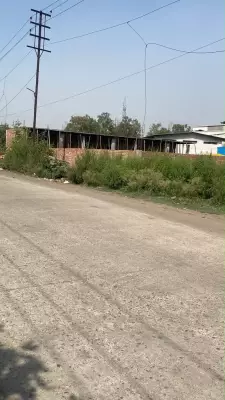
However, the Indian experience with signal-free corridors is not uniform. In Bokaro, Jharkhand, located nearly 1700 km from Chennai, roundabouts have historically functioned without formal traffic signals. Drivers navigate these spaces through instinct and mutual understanding, often maintaining a relatively smooth flow.
Conversely, in Kota, the theory of seamless movement frequently buckles under pressure. During peak hours, the redesigned intersections can descend into gridlock. Forced detours and unexpected bottlenecks emerge, demonstrating that infrastructure alone cannot always dictate perfect traffic behavior. The city, with a population of nearly 15 lakh (1.5 million), remains a unique case study as "the only traffic signal-free city" of its size in the country, as noted by RD Meena, the former officer on special duty who supervised the project.
Deeper Lessons on Traffic and Human Behavior
These varied outcomes highlight that the success of signal-free models depends on more than just concrete and asphalt. The experiments underscore critical lessons in traffic management. Infrastructure must be designed with deep local insight into volume patterns, driver habits, and peak-time demands.
Furthermore, they reveal intrinsic aspects of human behavior. Where Bokaro's roundabouts rely on informal cooperation, engineered solutions like Kota's require drivers to adapt to complex new layouts. The transition isn't always smooth, proving that engineering must work in tandem with public adaptation and education.
Ultimately, India's journey with signal-free roads shows that there is no one-size-fits-all solution for urban mobility. While the ambitious spending in Kota has not yielded universally flawless results, it has provided invaluable data and experience. The key takeaway is that managing traffic is as much about understanding people as it is about building roads.