

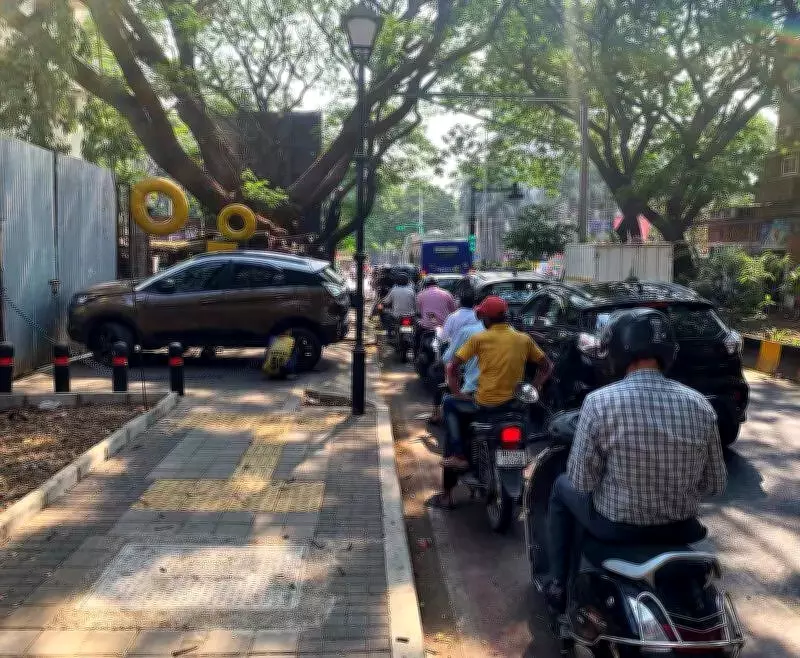
Pune's Harit Setu Project Faces Mounting Criticism from Residents
The ambitious Harit Setu project, launched by the Pimpri Chinchwad Municipal Corporation (PCMC) in 2024 after four years of planning, aimed to revolutionize street development with a sustainable integrated road network. Initially, the initiative promised wider pavements, walkable neighborhoods, and enhanced connectivity through eco-friendly infrastructure, prioritizing pedestrians and cyclists over private vehicles. However, just two years into its implementation, residents in areas like Nigdi, Akurdi, and Ravet are voicing significant discontent, questioning the project's effectiveness and planning process.
Residents Highlight Safety and Congestion Issues
Many long-time homeowners, who were initially attracted to the area for its wide, traffic-free roads, now report daily struggles with increased traffic congestion and safety hazards. Neelesh Shinde, a business owner residing in Nigdi Pradhikaran for 40 years, emphasized, "We are not against development but oppose projects that put our lives in danger." He pointed out that the Unified Development Control and Promotion Rules (UDCPR) of 2020 led to redevelopment of bungalows into multi-storeyed buildings, significantly increasing the population. This population surge, combined with narrower roads, has exacerbated traffic problems, leaving residents frustrated.
Shinde further criticized the project for failing to address practical needs, stating, "There is a need to upgrade electricity services, water lines, drainage and stormwater networks, rather than spending hundreds of crores of rupees on beautification." He highlighted that wider footpaths, intended for pedestrians, are often encroached upon by hawkers, forcing walkers into traffic and undermining the project's pedestrian-friendly goals.

Complaints Over Infrastructure and Parking Shortages
Residents like Pratibha Joshi Dalal, a lawyer living in the area since 1984, noted that newly constructed footpaths with decorative elements extend onto roads, making it difficult for larger vehicles like buses and trucks to navigate. "When a bus halts to pick up or drop off school students, it blocks an extra lane, causing a bottleneck," Dalal explained, adding that this leads to increased air and noise pollution, as well as longer travel times.
Parking has emerged as a major concern, with Chandrakant Kothari, a business owner of 20 years, stating that limited space forces residents to park on slopes or footpaths, leading to fines from traffic police and obstacles for pedestrians. This shortage also impacts local businesses, as visitors struggle to find parking spots. Additionally, waterlogging issues have arisen, with raised footpaths directing runoff into bungalows during rains, and these structures sometimes block emergency vehicles like fire engines and ambulances.
Lack of Public Consultation and Official Responses
Residents allege that their suggestions were ignored during the planning phase, despite PCMC calling for citizen input in 2020. Hemant Mishra, executive chairman of the Pradhikaran Traders Association, urged, "This multi-crore project being executed using taxpayers' money should be halted immediately." He and others feel excluded from decision-making, advocating for meetings with stakeholders and engineers to better manage the project's impact.
In response, PCMC executive engineer Bapusaheb Gaikwad defended the Harit Setu plan, stating it was developed after consulting multiple stakeholders to encourage non-motorized transport. "Our aim is to better the health of the neighbourhood and its residents," he said, acknowledging complaints about encroachments and promising regular drives to clear footpaths. PCMC commissioner Vijay Suryawanshi, while supportive of the project's ambitious goals, acknowledged resident concerns and pledged to address them through site visits and discussions.

Expert Insights on Sustainable Urban Design
Pranjal Kulkarni, programme manager at ITDP India, praised Harit Setu as a landmark initiative aligning with Supreme Court recognition of safe walking under Article 21 of the Constitution. However, he noted that issues like encroachment and illegal parking require strict enforcement and police support, beyond design solutions. Behavioral change programs and sensitization efforts are crucial for the project's success.
As the debate continues, residents remain hopeful for changes, with recent visits by officials like mayor Ravi Landge offering a glimmer of progress. The project, funded by Rs200 crore from green municipal bonds in 2025, aims to serve the area for the next 20 years, but its future hinges on addressing the growing discontent among those it was meant to benefit.





