

GMDA Launches Major Initiative to Transform Gurgaon Roads into Dust-Free Corridors
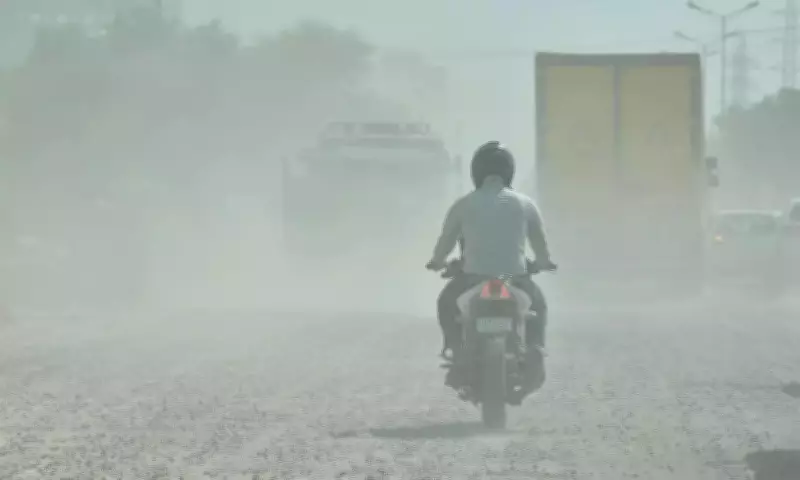
In a significant move to tackle persistent air pollution, the Gurgaon Metropolitan Development Authority (GMDA) has announced plans to identify and redevelop 15 key roads across the city. The objective is to transform these stretches into dust-free and sustainable corridors, directly addressing one of the region's most stubborn contributors to poor air quality.
Scientific Road Redesign to Combat Pollution
This initiative aligns with specific directions issued by the Commission for Air Quality Management (CAQM), which has mandated all road-owning agencies in the National Capital Region to undertake similar measures. Once shortlisted, the selected road stretches will undergo comprehensive redesign by two premier institutions: the School of Planning and Architecture (SPA) and the CSIR-Central Road Research Institute (CSIR-CRRI).
The redesign process will focus on implementing advanced scientific road engineering practices. Key elements include enhanced paving techniques, improved drainage systems to prevent waterlogging and dust accumulation, and strategic roadside greening to act as natural dust barriers. This holistic approach aims not only to reduce immediate dust emissions but also to create more resilient urban infrastructure.

Framework for Uniform Road Development Across NCR
The project builds upon a memorandum of understanding (MoU) signed last month between NCR states, SPA, and CSIR-CRRI. This agreement establishes a standardized framework for urban road development, covering critical aspects such as:
- Optimal road cross-sections and geometry
- Efficient utilization of right-of-way (RoW) spaces
- Strategic plantation and greening strategies
- Long-term maintenance protocols and sustainability measures
The primary goal is to bring uniformity in how roads are designed and maintained throughout the National Capital Region, with dust mitigation as a central focus. A senior GMDA official explained, "Under the CAQM directions, all road-owning agencies have been asked to identify 15 roads each for redevelopment as dust-free corridors. After shortlisting these stretches, we will share them with SPA and CSIR-CRRI, which will prepare scientific redesign plans."
Technology-Driven Maintenance with Road Asset Management System
A crucial component of this initiative is the implementation of a web-based Road Asset Management System (RAMS). This innovative system will enable:
- Preventive and predictive maintenance of road infrastructure
- GIS-based monitoring for real-time assessment of road conditions
- Transition from reactive repairs to structured, proactive upkeep mechanisms
- Long-term sustainability of dust-free road conditions
By leveraging technology, civic agencies aim to move beyond temporary fixes and establish a systematic approach to road maintenance that ensures lasting improvements in air quality.
Addressing the Scale of Gurgaon's Dust Problem
The urgency of this intervention becomes clear when examining recent inspection data. In December last year, CAQM conducted comprehensive inspections across Gurgaon, revealing alarming gaps in road maintenance. Of the 125 road stretches examined:
- Only four were completely free of visible dust
- 34 stretches showed high levels of dust accumulation
- 58 had moderate dust presence
- 29 recorded low dust intensity
These findings highlight the extensive nature of the problem and underscore the need for systemic, rather than piecemeal, solutions.
Comprehensive Strategy for Sustainable Urban Roads
The new framework addresses these challenges through a multi-faceted approach that combines design improvements with technology-driven maintenance. Specific strategies include:
Standardizing road geometry and cross-sections to optimize the use of available space while enhancing traffic flow and safety. Integrating greening measures within the right-of-way to create natural dust barriers and improve urban aesthetics. Adopting advanced construction techniques and materials that enhance road durability while minimizing the generation of loose dust particles.

The GMDA official elaborated, "The focus will be on reducing road dust, which is a major contributor to air pollution, and improving overall road design through better paving, drainage, and greening. GMDA has already worked with SPA earlier on a right-of-way management study, and we are working on those recommendations. With CSIR-CRRI also involved now, we expect more inputs on new technologies and materials that can further strengthen road construction and maintenance."
This comprehensive initiative represents a significant step forward in Gurgaon's ongoing battle against air pollution, combining regulatory mandates with scientific expertise and technological innovation to create cleaner, healthier urban environments for residents.





