

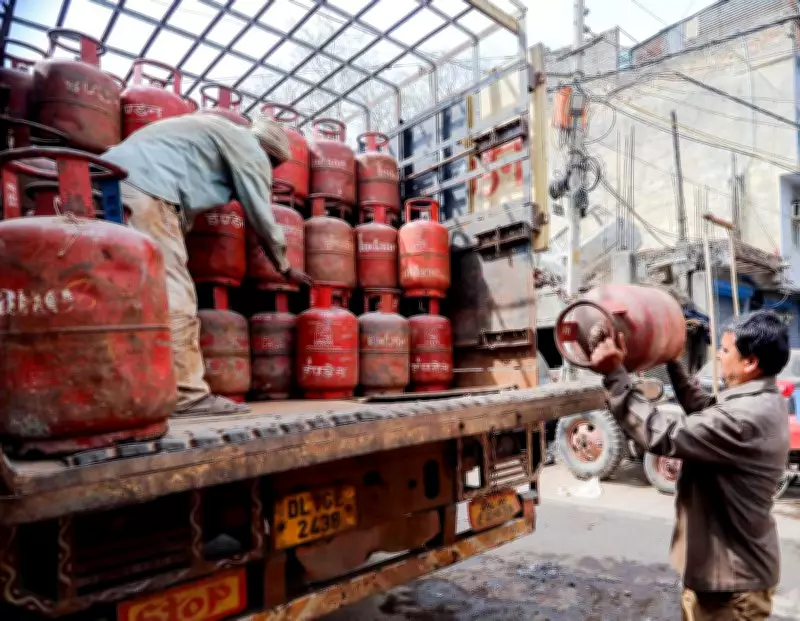
Government Mandates Aadhaar e-KYC for All Domestic LPG Consumers
The Ministry of Petroleum and Natural Gas has issued a directive requiring over 33 crore domestic LPG consumers across India to complete biometric Aadhaar-based authentication, commonly known as e-KYC. This move, announced on Monday, aims to streamline subsidy distribution and ensure targeted benefits under government schemes.
Ujjwala Yojana Beneficiaries Face Annual Authentication Requirement
For the more than 10.56 crore beneficiaries of the Pradhan Mantri Ujjwala Yojana (PMUY), annual Aadhaar authentication is mandatory to continue availing subsidies on cooking gas. Under this scheme, beneficiaries must complete biometric verification each financial year to receive a Rs 300 targeted subsidy on their eighth and ninth refills. If e-KYC is not completed, subsidies will cease after the seventh refill and only resume once authentication is done.
The government has encouraged consumers to verify their details from home using mobile apps from oil marketing companies or the Aadhaar FaceRD app. This announcement has sparked criticism from opposition parties, who argue it adds bureaucratic hurdles for vulnerable households.

LPG Supply Situation Described as "Worrisome but Under Control"
Petroleum Ministry Joint Secretary Sujata Sharma addressed concerns about LPG availability, stating the current situation is "worrisome but under control." She emphasized that there are no reports of dry-outs at any LPG distributorships, and supplies are being managed to meet all domestic requirements. Daily LPG refill requests have dropped to pre-war levels of 50-55 lakh on Sunday, down from 88.8 lakh on March 13, though it remains unclear if this decline is permanent or due to the weekend effect.
Push for Switch from LPG to Piped Natural Gas (PNG)
To alleviate pressure on LPG supplies, the government is actively promoting a transition to piped natural gas (PNG). City gas distribution companies have introduced incentives to encourage this switch. For instance, Indraprastha Gas in Delhi and the NCR is offering domestic LPG consumers free gas worth Rs 500 if they install a PNG connection before March 31. Similarly, Mahanagar Gas Ltd in Mumbai has waived Rs 500 registration charges for households and reduced security deposits for commercial users.
Sharma noted that 90% of domestic LPG bookings are now made online, a positive trend that enhances efficiency. The Delivery Authentication Code system, designed to prevent cylinder diversion, has expanded its coverage from 53% to 72% since the crisis began.
State-Level Actions and Enforcement Measures
Several states, including Bihar, Delhi, Haryana, Rajasthan, Manipur, and Maharashtra, have issued orders to regulate non-domestic LPG allocation in accordance with central guidelines. Enforcement actions have been intensified to combat hoarding and black marketing, with raids conducted in Uttar Pradesh, Haryana, Andhra Pradesh, Madhya Pradesh, Assam, and Mizoram.
Officials from public sector oil marketing companies have conducted surprise inspections at over 1,100 petrol pumps and LPG distributorships nationwide to ensure compliance and prevent malpractices.
Overall Fuel Availability Remains Stable
The government has assured that overall fuel availability in the country is stable. Crude oil supplies are adequate, refineries are operating at high capacity, and petrol pumps are functioning normally without any reports of dry-outs. Natural gas supply remains uninterrupted, with 100% availability for CNG and PNG consumers, though industrial and commercial consumers are receiving regulated supplies at around 80% capacity.
The Petroleum and Natural Gas Regulatory Board has directed city gas distribution entities to accelerate network expansion and reduce connection timelines, facilitating a smoother transition for consumers opting for PNG.
Consumers interested in switching to commercial PNG connections can contact city gas distribution companies via email, customer portals, letters, or call centers. Where pipelines are already in place, connections can be provided swiftly to ease the transition and reduce dependency on LPG.






