

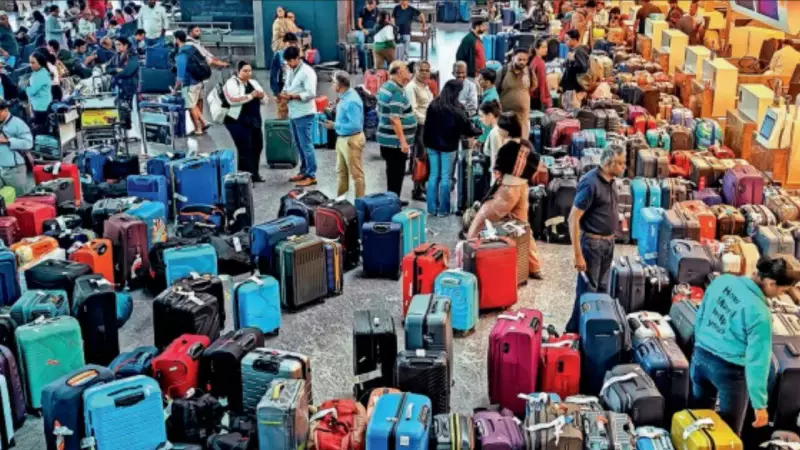
The Indian government has stepped in to address a major aviation crisis, suspending the newly implemented Flight Duty Time Limitation (FDTL) norms for pilots with immediate effect. This decisive move aims to restore normalcy in IndiGo's operations, which have been severely disrupted, with the airline targeting a return to regular schedules by December 15.
Immediate Relief for Stranded Passengers
The aviation ministry's intervention on Friday came on a day when over 1,000 IndiGo flights – more than half of its daily schedule – were cancelled. The chaos was particularly acute in the national capital, with no IndiGo flights operating from Delhi, disrupting the travel plans of lakhs of passengers. In response to the crisis, IndiGo is offering a full waiver on cancellation and rescheduling fees for all travel between December 5 and December 15. While cancellations continued on Saturday, the number dipped below 1,000 and is expected to gradually decline in the coming days.
The trigger for the government's action was IndiGo's plea for exemptions from certain operational norms. The airline, whose on-time performance plummeted to a shocking 8.5% on Thursday, had sought relief from rules like the cap on night landings a pilot can perform between midnight and 6 am. Its initial proposal aimed to restore normalcy in its Airbus A320 operations by February 10, 2026, a timeline the government found too distant given the current emergency. Consequently, the Directorate General of Civil Aviation's (DGCA) FDTL orders were put in abeyance.

Safety Assurances and Committee Formed
Union Aviation Minister Ram Mohan Naidu emphasized that the decision to pause the fatigue-combating rules was taken solely in the interest of passengers, especially vulnerable groups like senior citizens, students, and patients. He assured that the move "will not compromise on safety." To investigate the root cause of the disruption, the DGCA has constituted a four-member committee, headed by a joint director general. This committee is tasked with conducting a comprehensive review, identifying accountability for the operational failure, and assessing the adequacy of IndiGo's mitigation measures.
In an unprecedented step to aid recovery, the DGCA has offered its own Airbus A320-type-rated Flight Operations Inspectors (FOIs) to operate flights for IndiGo. These inspectors, who fly once a month to keep their licenses valid, have been volunteered to help the airline recover from its worst operational crisis in over 19 years.
Pilot Discontent and Industry Appeals
The suspension of the new FDTL norms has, however, sparked discontent among a significant section of pilots at IndiGo and other carriers. Many senior pilots express frustration at losing recently won rights to more humane work rosters, feeling treated as mere cost-cutting items. Sensing this simmering discontent, Minister Naidu held video meetings with pilot bodies, assuring them that the exemption is temporary.
DGCA chief Faiz Ahmed Kidwai issued a direct appeal to pilots' associations, noting the aviation sector is under "significant stress." His letter highlighted the approaching fog season, peak holiday travel, and the marriage season, urging full cooperation to handle expected passenger volume surges and weather-related challenges.
IndiGo CEO Pieter Elbers acknowledged the severity of the situation in a video statement, admitting the crisis had "shaken customers' belief in IndiGo's reliability." He reiterated the target of restoring normal operations between December 10 and 15, as aviation authorities pledge all possible steps to stabilize the airline's schedule at the earliest.






