

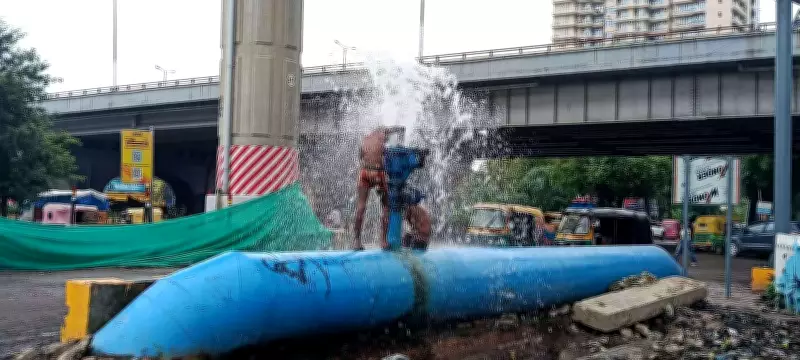
Ghaziabad's Water SCADA System Faces Summer Delay, Exacerbating Losses
Ghaziabad Municipal Corporation (GMC) has yet to implement its water SCADA (supervisory control and data acquisition) system as summer approaches, despite announcing the project last year to bolster water infrastructure and minimize losses. This delay persists even as the city grapples with significant water wastage due to pipeline issues.
Substantial Water Loss Amid Infrastructure Challenges
The water works department currently produces 347 million liters per day (MLD), but a staggering 25 to 30% of this supply, equivalent to 112 MLD, is lost annually due to pipeline leakages and other inefficiencies. GMC manages an extensive water pipeline network spanning 2,400 km, both underground and overground. The pipeline diameter reduces from about 25 inches at reservoirs to approximately 4 inches at households, making leakages common in such a vast system.
Traditional methods have been relied upon for years to address these leaks, often depending on public complaints for detection. An official from the water works department noted, "SCADA was introduced as a pilot project in Indirapuram and Kavinagar zones. It did help us cut down water loss. However, introducing a new system like this one is a long-drawn process. It involves tendering and groundwork, which takes time. It is most unlikely that we will be able to implement the new system by this summer."

SCADA's Potential and Groundwater Concerns
The SCADA system, equipped with sensors, is designed to detect leakages in pipelines and tubewells, alerting officials to malfunctions. This allows for real-time monitoring in a control room, enabling a dedicated team to address leaks precisely, regardless of whether the pipeline is underground or overground. The official added that SCADA could potentially reduce water loss by about 90%, offering a significant improvement over current practices.
More than 80% of GMC's water needs are met through underground sources, with the remainder sourced from surface water via the Ganga. According to the national compilation on Dynamic Ground Water Resources of India 2024 by the Central Ground Water Board, the groundwater extraction rate in the region stands at 124.04%, indicating that extraction exceeds replenishment, raising sustainability concerns.
Meeting Urban Water Demands
The city's water demand is estimated at 135 liters per capita per day. With approximately 600,000 consumers, GMC must not only augment its water production but also drastically cut down on losses to meet this demand effectively. The delay in SCADA implementation highlights ongoing challenges in urban water management and infrastructure modernization.
This report underscores the urgent need for advanced systems to address water loss and ensure reliable supply in growing urban areas like Ghaziabad.






