The much-anticipated Integrated Traffic Management System (ITMS) in Ghaziabad has encountered yet another postponement, with authorities attributing the latest delay to the absence of an official inauguration ceremony. This marks another setback for the project, which has been plagued by multiple missed deadlines over the years.
Project Status and Official Statements
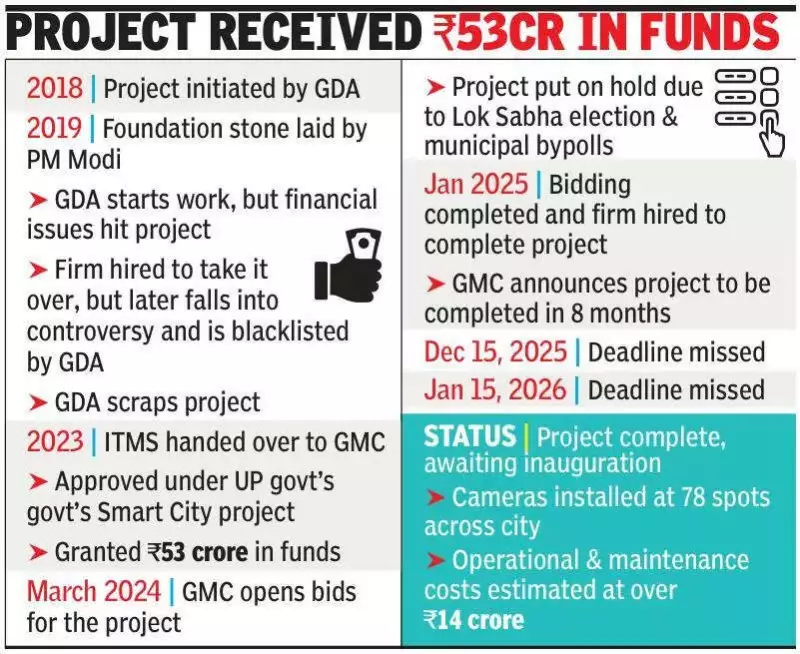
Originally scheduled to become operational on December 15, the deadline was subsequently extended to January 15. However, as January concludes, the ITMS remains non-functional. Officials have confirmed that the project is technically complete but is awaiting formal inauguration before commencing operations.
When questioned about the rationale behind further delaying the project, a senior official from the Ghaziabad Municipal Corporation (GMC) provided clarification. "Within two to three days, the project will be 'locally inaugurated', for which the mayor and police commissioner were informed and their consent was sought," the official stated. "This means that ITMS will start working and generating challans. The 'official inauguration' will, however, take place at the next convenient date."

Historical Context and Previous Challenges
The ITMS project was first initiated in 2018 by the Ghaziabad Development Authority (GDA). It was among several projects for which Prime Minister Narendra Modi laid the foundation stone in 2019. Despite this early momentum, work soon encountered significant obstacles.
The GDA's financial constraints limited its capacity to execute the project effectively. Consequently, a private firm was hired to take over the project. However, this company later became involved in a controversy, leading the GDA to blacklist the firm and officially scrap the project at that stage.
In June 2023, the project was transferred to the GMC, which has since been responsible for its implementation. Over the years, the initiative has faced numerous delays, with the corporation missing several deadlines thus far.
Financial Aspects and Infrastructure Details
Funded under the Smart City project, the state government allocated Rs 53 crore to the ITMS initiative. Of this substantial budget, more than Rs 2.4 crore is being dedicated solely to the command system. Additionally, operation and maintenance costs are estimated to be approximately Rs 14.4 crore.
Under the current implementation plan, cameras will be installed at 78 strategic locations across Ghaziabad. The specific junctions and roundabouts designated for camera installation include:
- Hapur Tri-junction to Mohan Nagar
- Mohan Nagar to Seemapuri border
- Tulsi Niketan to Nag Dwar
- Elevated Road to Hapur Chungi
- ALT to Meerut Tri-junction
- Hapur Chungi to Atma Ram Steels
- Old Bus-Stand to Ambedkar Road
- Hapur Tri-junction to Lal Kuan
Political Reactions and Broader Implications
The ongoing delays have drawn criticism from political figures. All India Congress Committee spokesperson Dolly Sharma, who previously contested unsuccessfully for both the mayoral post and the Lok Sabha seat from Ghaziabad, expressed strong disapproval of the government's handling of the project.
"The government at both the Centre and the state has scant regard for public convenience, even though the projects are made from taxpayers' money," Sharma remarked. "Be it ITMS, Namo Bharat or Doon Expressway, which is awaiting official inauguration even though the projects are complete and should have opened for the public, inauguration or not."
This statement highlights broader concerns about infrastructure project management and the prioritization of ceremonial events over public utility. The ITMS delay reflects a pattern where completed projects remain inaccessible to citizens due to procedural formalities.
The Integrated Traffic Management System represents a significant investment in Ghaziabad's urban infrastructure, aimed at improving traffic regulation and enforcement through technological solutions. Its repeated postponements underscore the challenges in implementing large-scale civic projects within stipulated timelines.

As authorities prepare for a local inauguration to enable functionality, residents await the operationalization of a system that promises enhanced traffic management across key city corridors. The project's journey from conception to potential implementation continues to be marked by administrative hurdles and shifting deadlines.