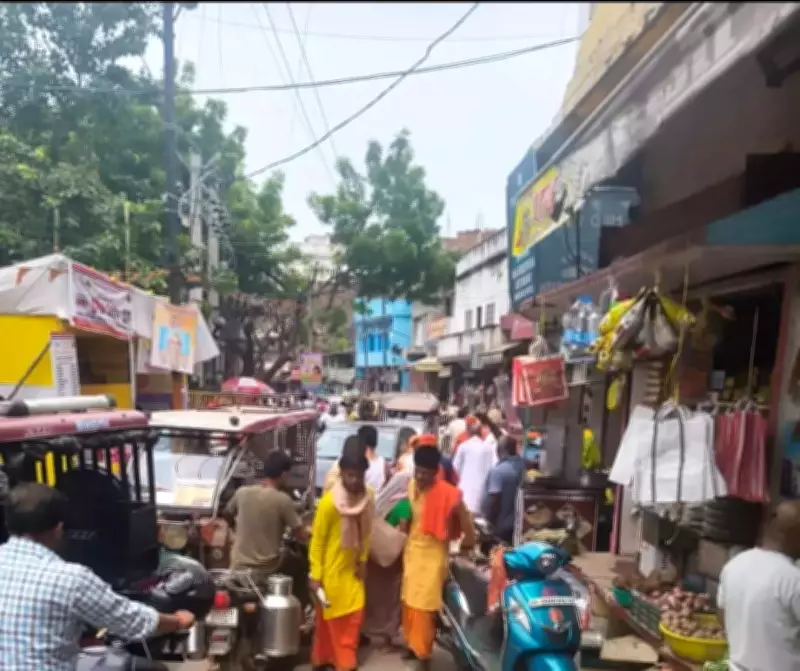
It is an astonishing reality that Gaya, a city with a population approaching seven lakh and a significant destination for pilgrims and tourists throughout the year, operates without a single electronic traffic signal. This glaring infrastructural gap has transformed the city into a perpetual maze of traffic jams and congested roadways, severely impacting daily life.
The Human and Economic Toll of Manual Management
Manual traffic management has proven utterly inadequate for the city's needs. Residents routinely suffer lost man-hours, while many commuters regularly miss crucial trains and flights due to the chaotic conditions at unregulated intersections. The absence of basic traffic control infrastructure has taken a serious toll on the quality of life, creating a persistent source of frustration and economic loss for the city's inhabitants.
A Decade of Delays and Unclear Timelines
The proposal to install electronic traffic signals was first initiated nearly ten years ago, yet it has failed to progress beyond the planning stage. To this day, there remains no definitive clarity on when this critical project will finally be implemented, leaving citizens in a state of prolonged uncertainty.

When questioned about the scheme's status, Municipal Commissioner Abhishek Palasia clarified that the program falls under the jurisdiction of the government's urban development department. He stated that the municipal corporation's role was limited to identifying the specific locations where traffic signals are required.
According to Palasia, the municipal corporation has completed its assigned task, submitting a comprehensive list of traffic intersections earmarked for signal installation. Furthermore, the urban development department has also been tasked with installing high-resolution CCTV cameras to enhance traffic management and monitoring capabilities.
Palasia indicated that, based on available information, the urban development department is currently working on the project, with an expected completion timeline of five to six months. However, given the extensive history of delays, few residents or observers are willing to accept this projected timeline at face value.
Beyond Signals: The Need for Holistic Urban Planning
Activist Nand Kishore Prasad, widely known as Johnny, emphasized that a piecemeal approach is insufficient for Gaya's development. He argued that installing traffic signals alone will not resolve the deep-rooted traffic issues. A holistic strategy is essential.
Johnny highlighted a fundamental urban planning failure: the city has been without a functional master plan for decades. The last master plan, formulated in the 1960s, expired over twenty years ago, and a new one has yet to be finalized. This absence has led to haphazard, unplanned growth, exacerbating traffic and infrastructure challenges.
Decongestion: A Critical Parallel Requirement
The activist pointed out that decongesting the main commercial and official areas is equally vital. Proposals to relocate major traffic magnets, such as the land registration office and the wholesale market, remain pending, contributing significantly to the gridlock.
While some initiatives, like the relocation of the district transport and survey office, have been undertaken, the land registration office continues to attract the highest footfall. Its current location is a primary contributor to the city's persistent traffic woes.
Syed Shad Alam, a resident of Chuna Gali, corroborates this, stating he encounters daily traffic jams directly attributable to the office's placement. He describes it as a major factor in the city's ongoing transportation crisis.
The situation in Gaya underscores a critical failure in urban infrastructure management. The decade-long wait for basic traffic signals, coupled with the lack of comprehensive planning, reflects broader systemic issues that require urgent and coordinated action from all governing bodies to restore order and improve the quality of life for its residents.