

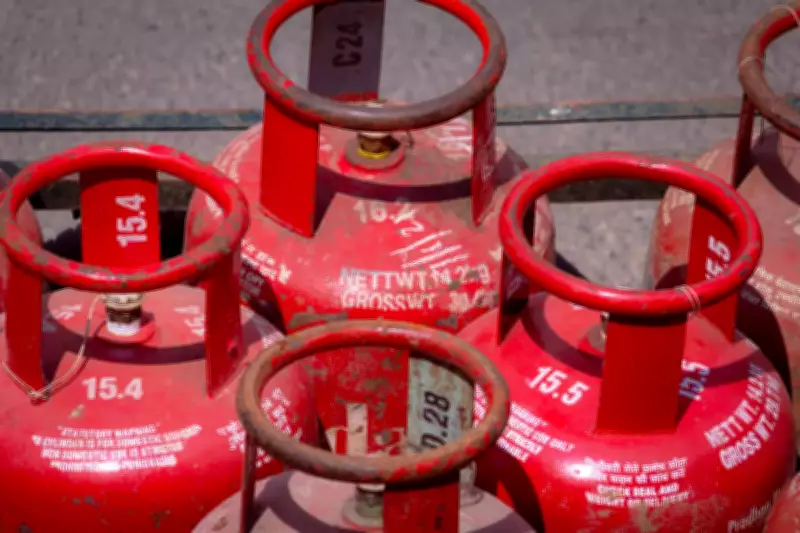
Delhi Government Revises Commercial LPG Policy, Links Supply to PNG Adoption
The Delhi government has implemented significant changes to the supply conditions for commercial liquefied petroleum gas (LPG) cylinders, introducing new eligibility criteria that require businesses to take concrete steps toward adopting piped natural gas (PNG) in areas where the infrastructure is already available. This move is part of a broader strategy to manage energy resources more efficiently and promote cleaner fuel alternatives.
Revised Framework for Commercial and Industrial Users
According to the updated policy, which was officially notified through an order from the Food, Supplies and Consumer Affairs Department, commercial and industrial entities will now only receive LPG supplies if they meet specific conditions. These users must be registered with the relevant oil marketing company (OMC) and have applied for a PNG connection in regions where the pipeline network is operational.
In areas where PNG infrastructure is not yet established, consumers are required to submit a formal declaration expressing their intent to transition to PNG once it becomes available. This declaration serves as a commitment to future adoption, ensuring that businesses are prepared to shift as the network expands.

Enforcement and Compliance Mechanisms
To ensure adherence to these new norms, OMCs have been assigned the responsibility of verifying consumer records. They must collect documentation at least once to confirm that each consumer is properly registered and has either applied for a PNG connection or submitted an intent declaration. The collected details will be shared with Indraprastha Gas Limited (IGL) for further processing and coordination.
The order explicitly states, "When supplying to commercial gas consumers, the OMCs shall at least once collect documentation records to ensure that the consumer is registered with the OMC and has either applied for a PNG connection or has submitted an application indicating the intent to obtain a PNG connection upon its availability."
Operational Flexibility and Exceptions
Despite the stringent requirements, the policy includes provisions for operational flexibility. Businesses that have a legitimate need for both LPG and PNG can submit a request to the additional commissioner of the department, explaining their specific requirements. These applications may be collected by OMCs and forwarded for consideration, with decisions to be made in consultation with the three major OMCs.
The order clarifies, "The OMCs could also collect such applications and submit to the Additional Commissioner for a prompt decision. The Additional Commissioner shall promptly dispose of the same in consultation with the three Oil Marketing Companies."
Background and Government Objectives
These revised norms are introduced against the backdrop of recent government measures aimed at alleviating pressure on LPG supplies. Additional Commissioner Arun Kumar Jha previously highlighted that Delhi has approximately 56 lakh domestic LPG connections and urged residents to ensure proper registration to prevent misuse and diversion.
Jha also emphasized the expansion of PNG infrastructure, stating, "Wherever PNG connections are available, residents should shift from LPG to PNG," and noted that the pipeline network has reached "every village." This push aligns with broader environmental and energy security goals, encouraging a transition to more sustainable fuel sources.
Monitoring and Grievance Redressal
To oversee the implementation of these changes and address any issues, the department has established a control room to monitor developments and gather complaints. Residents were previously encouraged to report suspicious activities through helpline numbers 011-23379836 and 8383824659, available between 9 am and 7 pm, with assurances of prompt action on verified complaints.
This comprehensive approach underscores the Delhi government's commitment to streamlining energy distribution, reducing reliance on LPG, and fostering the adoption of PNG as a cleaner alternative for commercial and industrial sectors.






