

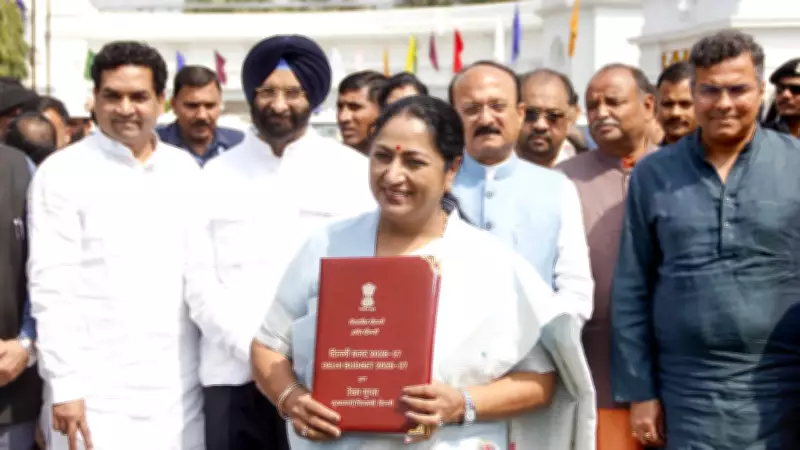
Delhi Government Announces DITI Aayog Think Tank for Localized Policy Formulation
In a significant move to enhance governance, the Delhi government will establish a policy think tank called the Delhi Institutional Think Tank for Innovation, or DITI Aayog. This initiative, modeled after the national NITI Aayog, aims to make policy formulation more focused and tailored to the capital's specific needs. Chief Minister Rekha Gupta made the announcement while presenting the 2026-27 budget on Tuesday.
Structure and Implementation of DITI Aayog
Chief Minister Gupta stated that the DITI commission will be set up to ensure policy-making becomes more Delhi-centric. She later clarified to media outlets that the structure and terms of reference for this proposed body will be finalized shortly. The institution is expected to be chaired by a Member of the Legislative Assembly (MLA) and supported by a team of bureaucrats. However, a final decision on its composition will be taken after the draft is prepared and reviewed by the Delhi cabinet.
Broader Governance Reforms and Digital Initiatives
The announcement is part of a comprehensive governance push centered on decentralization, digitalization, and transparency. The government has proposed an allocation of Rs 4,304 crore for the revenue department in the 2026-27 fiscal year to drive these reforms. A series of digital initiatives have been outlined, including:

- The CM Jan Sunwai portal for public grievances.
- A comprehensive asset management system.
- The CM Pragati portal for monitoring projects above Rs 5 crore.
- An Integrated Financial Management System to streamline financial operations and enhance accountability.
Property Registration and Infrastructure Development
Chief Minister Gupta revealed plans to introduce a paperless and faceless property registration system at the sub-registrar level, similar to passport services. Funds have also been allocated for an emergency operations center under the Delhi Disaster Management Authority and for expanding judicial infrastructure. Additionally, mini-secretariats will be established in all 13 districts to provide integrated public services.
The first such facility in Dwarka has been approved at an estimated cost of Rs 213 crore, with Rs 100 crore earmarked for construction in the next financial year. Gupta emphasized that every property in Delhi will be assigned a unique identification number, referred to as "Bhu-Aadhaar," and land records will be digitized through the NGDRS portal.
Financial Autonomy and Future Outlook
In a related development, the central government has approved the separation of the Delhi government's public account from its own, a move expected to improve financial autonomy. This decision aligns with the broader goals of enhancing governance efficiency and responsiveness to local needs.
The establishment of DITI Aayog represents a strategic step towards creating policies that are more attuned to Delhi's unique challenges and opportunities, fostering innovation and sustainable development in the capital.






