

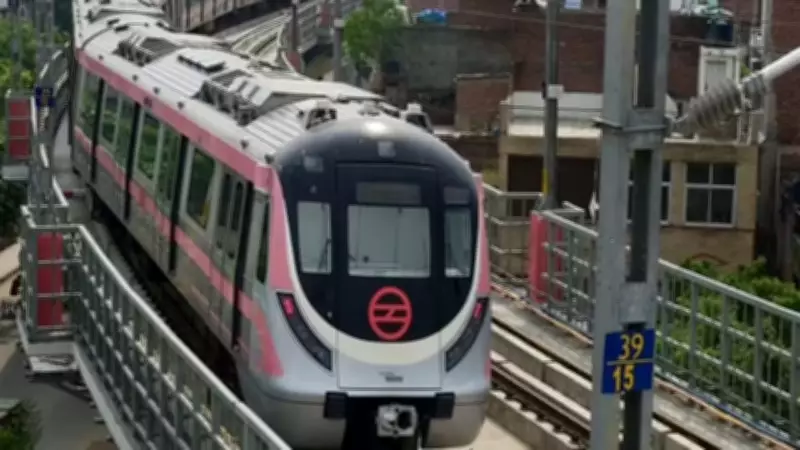
Delhi Metro Phase V(A) Gets Green Light with Key Central Vista Corridor
In a significant development for urban mobility, the Delhi government has officially approved Phase V(A) of the Delhi Metro project, following clearance from the Centre. This approval, announced on Wednesday, marks a major step forward in expanding the capital's public transport network, with a focus on enhancing connectivity and reducing traffic congestion.
Project Overview and Financial Commitments
Chief Minister Rekha Gupta revealed that Phase V(A) is estimated to cost Rs 12,014.91 crore. The Delhi government will contribute Rs 2,940.46 crore towards this ambitious initiative. The decision was made during a Cabinet meeting chaired by Gupta, as part of broader efforts to modernise and strengthen Delhi's public transport infrastructure.
Gupta expressed gratitude to Prime Minister Narendra Modi for his support, noting that the project aligns with his "7-C Vision" for mobility, which emphasises Common, Connected, Convenient, Congestion-free, Charged, Clean, and Cutting-edge transport solutions. She highlighted that strengthening public transport is crucial for alleviating congestion and improving air quality in the national capital.

Approved Corridors and Key Details
The approved Phase V(A) includes three major corridors, designed to improve connectivity across Delhi:
- RK Ashram Marg to Indraprastha Corridor (via Central Vista): This 9.91-km corridor will feature nine stations, with the route passing through the Central Vista area. It is expected to connect key administrative and cultural locations, such as Kartavya Bhavan complexes, benefiting an estimated 60,000 government employees and nearly two lakh daily commuters. Major stations along this stretch include RK Ashram Marg (under construction), Shivaji Stadium, Central Secretariat, CCS Buildings, India Gate, War Memorial-High Court, Baroda House, Bharat Mandapam, and Indraprastha. The estimated cost for this corridor is Rs 9,570.40 crore, with the Delhi government contributing Rs 2,337.24 crore.
- Aerocity to Indira Gandhi Domestic Terminal-1 Corridor: Spanning 2.26 km, this corridor will include one station, providing direct metro access to the airport. Chief Minister Gupta stated that this will help ease traffic congestion in the surrounding areas. The project cost is estimated at Rs 1,419.64 crore, with Rs 351.86 crore funded by the Delhi government.
- Tughlakabad to Kalindi Kunj Corridor: Covering 3.9 km, this corridor will have three stations and aims to improve connectivity in south and south-east Delhi. The estimated cost is Rs 1,024.87 crore, with the Delhi government contributing Rs 251.36 crore.
Infrastructure and Station Details
Of the 13 proposed stations across the three corridors, 10 will be underground and three elevated, reflecting a mix of construction methods to optimise urban space and efficiency. This strategic approach ensures minimal disruption to existing infrastructure while maximising accessibility.
The approval of Phase V(A) underscores a concerted push towards sustainable urban development in Delhi, with the metro expansion poised to transform daily commutes and support economic growth. As the project moves forward, it is expected to play a pivotal role in shaping a more connected and environmentally friendly capital city.






