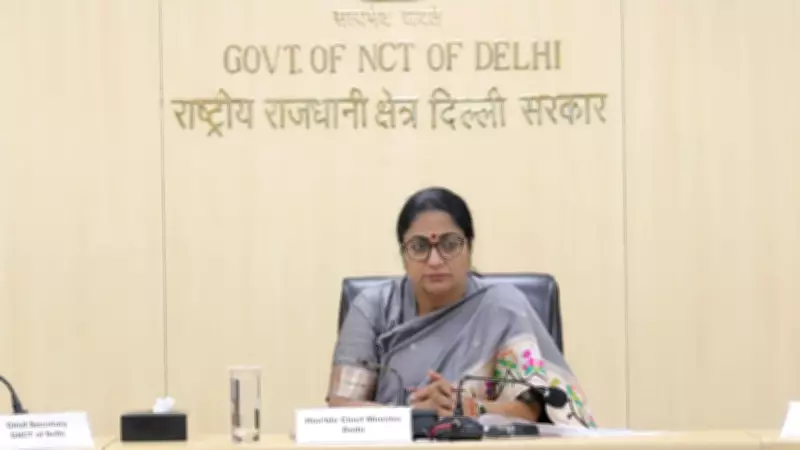
Months after unveiling an ambitious Rs 57,362.85-crore drainage master plan, the Delhi government has formally approached the World Bank to secure financial assistance for this critical infrastructure project. On Monday, a high-level meeting was convened to discuss the implementation of the plan, marking a significant step towards addressing the city's long-standing drainage issues.
High-Level Meeting with World Bank Representatives
Naveen Kumar Chaudhary, Additional Chief Secretary of the Public Works Department (PWD), chaired a crucial meeting with representatives from the World Bank and senior PWD officials. The discussions centered on the execution of the Delhi Drainage Master Plan 2025, a comprehensive 30-year strategy designed to overhaul the capital's aging drainage system.
Officials emphasized that this initiative is vital for strengthening Delhi's drainage infrastructure, mitigating urban flooding, and enhancing resilience against extreme rainfall events. The plan aims to achieve a 50% reduction in waterlogging and flood-related incidents within five years, providing much-needed relief to residents.

Key Details of the Drainage Master Plan
During the meeting, Chaudhary briefed the World Bank officials on the involvement of various stakeholder agencies, including the Municipal Corporation of Delhi (MCD), the Irrigation & Flood Control department, and the PWD. He also highlighted the high estimated cost of the project, underscoring the need for external funding.
The Detailed Project Reports (DPRs) for all three major drainage basins—Najafgarh, Barapullah, and Trans-Yamuna—were formally handed over to the World Bank representatives. Officials requested the bank to examine these reports in detail and consider providing financial or technical assistance, or both, to ensure the effective and timely implementation of the master plan.
Historical Context and Implementation Progress
The Delhi Drainage Master Plan 2025 is noted as the first such comprehensive plan for the capital in 50 years. While the previous AAP government had initiated its preparation with IIT Delhi, the current BJP-led administration has refined the approach, focusing on basin-wise strategies as recommended by former PWD Minister Manish Sisodia.
Execution of the master plan has already begun, with the PWD and other government agencies working to assess the compatibility of the scheme. Specific projects underway include work on the Nangloi drain and Karala Kanjhawala drain, which are expected to be completed before the next monsoon season. Additionally, tenders have been floated for the Azadpur drain, and funds have been sanctioned for the redevelopment of the Mehrauli-Badarpur Road drain, with a Notice Inviting Tender (NIT) in preparation. These efforts are projected to benefit five assembly constituencies by improving drainage systems.
Scope and Phased Implementation
The master plan targets the redevelopment and improvement of a vast drainage network spanning 18,958 kilometers, currently managed by eight different agencies in Delhi. The implementation will be phased over five years:
- First Two Years: Address waterlogging hotspots under various agencies.
- Third Year Onwards: Begin large-scale infrastructure development in colonies lacking drainage networks.
- By 2029-2030: Complete final testing and system handover.
Financial requirements for the basins are substantial: the Najafgarh Basin, with a catchment area of 918 square kilometers, is estimated to cost around Rs 33,499 crore. The Barapullah Basin, handling approximately 80% of stormwater drains and covering 376.27 square kilometers, requires about Rs 14,547 crore. The Trans-Yamuna area, spanning 196.93 square kilometers, needs a budget of Rs 9,317 crore.
This proactive approach by the Delhi government, in collaboration with international bodies like the World Bank, underscores a committed effort to transform the city's drainage infrastructure and safeguard against future flooding challenges.