The Praja Foundation, a prominent non-governmental organisation, has unveiled a comprehensive Citizens' Manifesto ahead of the upcoming municipal elections in Maharashtra. The document outlines a series of critical reforms aimed at improving urban governance and service delivery across the state's civic bodies.
Key Demands for Transparent and Accountable Governance
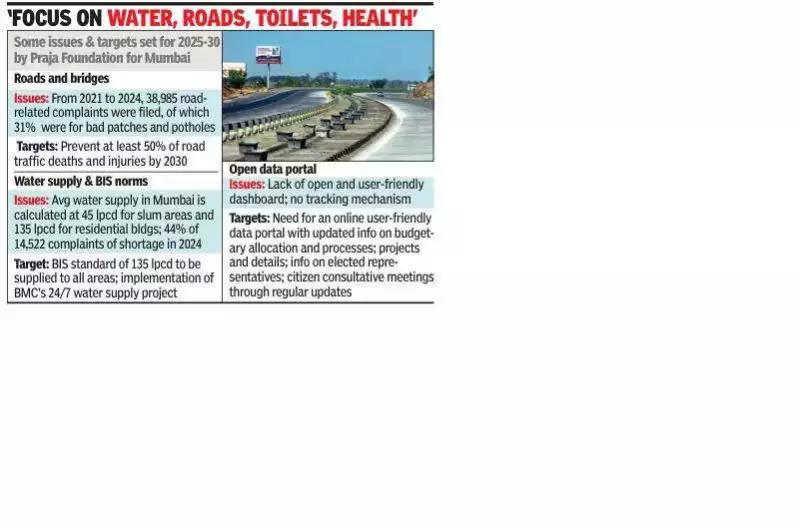
Addressing the media in Mumbai on Tuesday, foundation officials presented a detailed roadmap for the next five years. A central pillar of their manifesto is the demand for open and free access to civic data to ensure transparent governance. The NGO insists that granular-level data be made publicly available at the ward level.
The foundation also calls for ward-wise quarterly work performance reports and seeks a formal pledge from all electoral candidates and political parties to commit to the manifesto's four core promises. Members of the NGO plan to meet with parties and candidates soon to secure these pledges.

Focus on Basic Services and Municipal Capacity
Milind Mhaske, CEO of the Praja Foundation, highlighted a significant concern. He pointed out that civic bodies, including the Brihanmumbai Municipal Corporation (BMC), have focused heavily on large infrastructure projects over the past three years, often at the expense of basic services. "Attention should have been paid to delivering and improving basic civic services along with the infrastructure projects," Mhaske stated.
He further emphasised that municipal corporations in Maharashtra have operated without elected representatives for three years, a situation that has severely weakened public accountability. The manifesto seeks to rectify this by bolstering citizen participation and increasing municipal capacity through specialised training for staff.
Priority Service Commitments for 2025-2030
The foundation has laid out specific, measurable targets for the next municipal term. Key service commitments include ensuring equitable water distribution, with a goal to supply water at the BIS standard of 135 litres per capita per day (lpcd) to both slum and non-slum areas, coupled with universal metering.
Other critical demands are:
- Providing clean, functional, and gender-balanced public toilets.
- Implementing daily segregated waste collection in every ward.
- Ensuring pothole-free roads with transparent quality standards.
- Creating walkable, obstruction-free footpaths for pedestrians.
- Publishing monsoon preparedness plans with vulnerability mapping before the rainy season.
To achieve efficient service delivery, the manifesto insists municipal bodies establish clear, measurable service level benchmarks for all public services and enforce strict adherence through robust monitoring systems.
Addressing Staffing and Systemic Reforms
The Praja Foundation also tackles systemic issues within civic administrations. It highlights critical vacancies, such as 31% of medical posts and 42% of paramedical posts in the BMC being unfilled. The manifesto calls for a review to right-size cadre strength, eliminate redundancies, and optimise staffing.
Furthermore, it advocates for introducing performance-linked promotions and incentives for municipal officials and staff to improve efficiency and accountability. The foundation also recommends allowing lateral entrants in specialised fields like climate planning, finance, and data analytics to bring in fresh expertise.
Among the longer-term institutional targets set for 2025-30 is making the city government a single planning authority and creating platforms that allow citizens to directly express their needs and wants to the administration.