

India's Monumental Census 2027: A Digital Transformation in National Enumeration
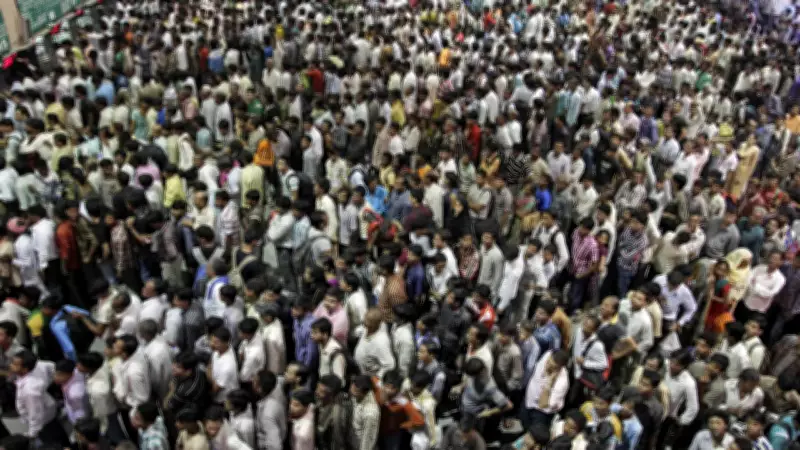
Counting every individual in a nation exceeding 1.4 billion residents represents an enormous logistical challenge. India is now gearing up to execute one of the planet's most massive enumeration endeavors—the Census 2027. This nationwide headcount was initially planned for 2021, following India's established decadal census pattern maintained since 1881. However, the Covid-19 pandemic and subsequent electoral cycles caused multiple postponements of this critical exercise.
Why Census 2027 Matters Profoundly
The Census functions as a national mirror, vividly reflecting transformations in identity, occupation, living standards, and family configurations across the entire population. This invaluable data assists the judiciary, policymakers, and academic researchers in monitoring patterns related to migration, urbanization, employment, and fertility rates. Numerous government ministries—from education to rural development—depend on census statistics to identify where schools, primary healthcare centers, and infrastructure initiatives are most urgently required.
Population figures directly influence central financial grants to states and districts, along with the distribution of subsidies and ration supplies. This particular census carries heightened political significance because it will establish the foundation for Lok Sabha delimitation, a process that has remained suspended since 2002. Furthermore, the Women's Reservation Bill, which allocates one-third of seats in the Lok Sabha and state assemblies for women, may be implemented following the census and subsequent delimitation activities.

Comprehensive Methodology and Digital Innovation
According to official announcements, the exercise will unfold in two distinct phases: the House-listing and Housing Census, followed by Population Enumeration. The government plans to deploy approximately 30 lakh field functionaries for data collection, monitoring, and supervision, supported by a financial allocation of Rs 11,718.24 crore.
Phase I: The house-listing operation will gather information on 33 parameters, including construction materials, access to drinking water, sanitation facilities, household assets, and cooking fuel sources. This data will help construct a detailed profile of housing conditions and amenity access nationwide. The New Delhi Municipal Council (NDMC) will initiate the house-listing exercise starting April 15.
Phase II: The second phase will concentrate on individual demographic details, encompassing name, age, sex, date of birth, relationship to household head, marital status, education level, occupation, religion, caste or tribe affiliation, disability status, and migration history. Enumerators will record particulars for every person—including homeless individuals—ensuring the database comprehensively captures demographic and socio-economic information.
Groundbreaking Digital Implementation
Census 2027 will mark India's inaugural fully digital census, utilizing mobile applications, online self-enumeration, and near-real-time monitoring systems. A secure web-based portal will enable eligible household members to submit their data in 16 languages. Upon submission, a unique Self-Enumeration ID will be generated for subsequent verification by field enumerators during visits.
The government emphasized its commitment to expedited data availability, stating: "The current endeavor would be to make available the coming Census data at the shortest possible time across the country. Efforts will also be made to disseminate Census Results with more customized visualization tools. Data sharing to all, up to the lowest Administrative Unit i.e. Village/Ward level."
The Home Ministry highlighted that digital platform adoption will minimize paperwork, boost efficiency, and enhance transparency throughout the census process. Four specialized digital tools have been launched to modernize operations:

- Houselisting Block Creator (HLBC) Web Application: A web-mapping platform enabling officials to create houselisting blocks using satellite imagery for standardized geographic coverage.
- HLO Mobile Application: A secure offline app allowing enumerators to collect and upload houselisting data directly from field locations using registered mobile devices.
- Self-Enumeration Portal: A web-based platform permitting households to voluntarily submit census information online before field verification.
- Census Management and Monitoring System (CMMS) Portal: A centralized dashboard to plan, manage, and monitor census activities across district, state, and national levels in real time.
Historic Caste Enumeration Revival
This census will be the first since 1931 to collect caste data for all communities. Caste enumeration was a regular feature during British administration from 1881 to 1931. However, with independent India's first census in 1951, the government discontinued the practice except for Scheduled Castes (SCs) and Scheduled Tribes (STs).
The Ministry of Home Affairs clarified: "Questions for the second phase, including the Questions on Caste, will be notified before the commencement of the second phase of the Census Operation. Several representations regarding the enumeration of Caste have been received from various organisations of different States, including of the State of Tamil Nadu. The questions, including on Caste, for the second phase will be finalized and notified as per the established procedure." This decision represents a significant policy shift after over seven decades of hesitation.
Delimitation Dynamics and Regional Concerns
Census 2027 has reignited discussions about parliamentary constituency delimitation. Once final census data is published, the government will likely commence the delimitation process. Parliament must pass a Delimitation Act to authorize formation of a Delimitation Commission, which will determine population-to-constituency formulas after consulting stakeholders including state governments.
Increasing Lok Sabha seats would require a constitutional amendment needing two-thirds parliamentary majority. According to Article 81 of the Constitution, total Lok Sabha seats cannot surpass 550. This issue remains politically sensitive, with several southern states contending that population-based delimitation could diminish their parliamentary representation.
Southern states have demonstrated superior population control compared to many northern states, raising concerns about potential north-south political imbalance. The DMK government in Tamil Nadu has previously passed resolutions opposing census-based delimitation.
Expert Perspectives and Implementation Challenges
Nabhnipa Bhattacharjee, a sociology professor at Sri Venkateswara College, University of Delhi, noted that census delays could impact policy planning: "It is a great delay. Even if the entire exercise concludes in 2027, the data may reach ministries only by the end of 2027 or early 2028, leaving limited time to design targeted welfare policies."
Bhattacharjee identified delimitation, digital infrastructure, caste enumeration, and census conduct in Jammu and Kashmir and Ladakh post-Article 370 abrogation as key issues requiring attention. She explained: "The key question will be how the government approaches delimitation after the census, especially since it has already triggered a north–south debate. The introduction of digital enumeration is another challenge, given that large sections of the population still lack digital literacy."
Regarding caste data, she added: "Another issue to watch is the government’s decision to include questions on caste in the census. Despite the announcement, details on how the data will be collected, categorised and used are still not clear." The collected data will undergo central processing and staged release—first provisional population totals, then detailed tables disaggregated by multiple indicators, incorporating quality checks, re-verification, and audits to ensure accuracy.





