

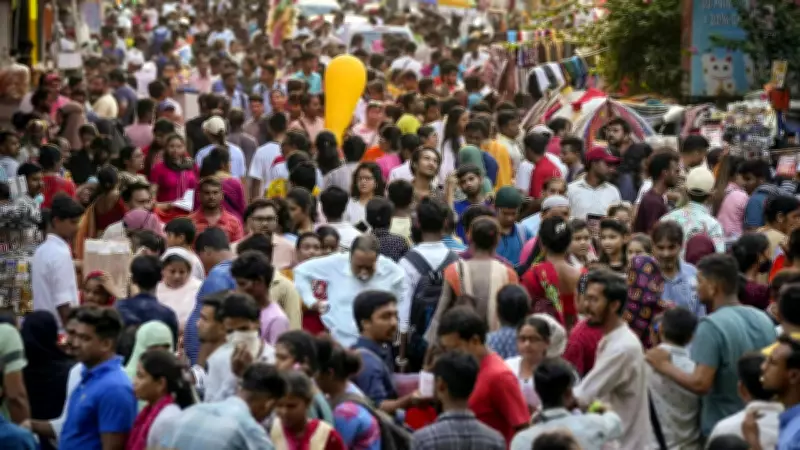
Census 2027: India's First Digital Census to Deliver Faster Data Release
NEW DELHI: A significant portion of the Census 2027 datasets is expected to be released within the same year, thanks to the groundbreaking digital data capture methodology being implemented from the outset. Registrar General of India and Census Commissioner Mritunjay Kumar Narayan provided this assurance ahead of the launch of Census 2027, which marks the world's largest and India's inaugural digital population data collection initiative.
Digital Transformation Accelerates Data Processing
"Previously, census data was collected on paper forms and subsequently digitized, creating a lengthy and cumbersome compilation process," explained Narayan. "The shift to direct digital collection will ensure that Census 2027 datasets are published much more rapidly, enabling timely access to crucial demographic information."
Narayan appealed to all citizens to participate actively and provide accurate information during the census, emphasizing that census data serves as the foundation for shaping public policy and socio-economic interventions across the nation.

Self-Enumeration: A Historic First for Indian Census
The Registrar General expressed optimism that a substantial percentage of the population will choose self-enumeration, another pioneering feature in the history of the Indian Census. This process will be facilitated through a dedicated portal equipped with tooltips and frequently asked questions to guide users seamlessly through the enumeration process.
The houselisting operations phase, which gathers data on housing conditions and amenities, commences on April 1 across eight states and union territories, including Delhi's NDMC and cantonment areas. All states and union territories, with the exception of West Bengal, have selected separate HLO timelines spanning from April to September.
The initial 15 days of the 45-day HLO period are exclusively reserved for self-enumeration, marking another historic first in census operations. Following this window, over 30 lakh enumerators will conduct field visits over the subsequent 30 days. "We anticipate West Bengal will notify its HLO schedule shortly," added Narayan.
Population Enumeration and Caste Data Collection
The HLO phase will be succeeded by population enumeration in February of the following year. March 1, 2027, has been designated as the reference date for Census 2027, with exceptions for certain snow-bound regions. During the population enumeration phase, individual data fields such as religion, fertility rates, socio-economic status, migration patterns, and—for the first time since 1931—caste information will be captured.
The questions for Phase-2, which will include the caste count, are yet to be finalized and will be notified at a later date, according to the Registrar General.
NPR Delinked from Census 2027
When questioned about the decision to delink the National Population Register updation from Census 2027, contrary to the original plan for Census 2021, and whether this was influenced by the Special Intensive Revision of electoral rolls exercise, the RGI dismissed any correlation between the two initiatives. This confirmation follows earlier reports that NPR updation would not be conducted alongside Census 2027.
Data Confidentiality and Collection Methodology
Narayan reassured the public that individual data recorded during Census 2027 will be maintained with strict confidentiality, as mandated by the Census Act. "Individual census data cannot be shared with any government agency, accessed under the Right to Information Act, or produced before courts," he stated. "Only aggregated statistical data will be utilized for tabulation purposes."
Census 2027 data will be collected through a dedicated mobile application, while a web portal will oversee and manage various census and house listing activities. Block creation will be executed via a web mapping application, and respondents are not required to provide any documents during the census process.

Caste Questions Under Deliberation
Regarding the methodology for capturing caste information during the population enumeration phase scheduled for February next year, Narayan clarified that the questions for this phase are still under development. "Numerous suggestions have been received on how to collect caste information effectively," he noted. "All proposals will be carefully considered, and the most suitable approach will be selected to frame and finalize the questions accordingly."
When asked about potential risks of respondents declaring incorrect caste information to avail reservation benefits, Narayan emphasized that individual information collected during the census is not intended for any administrative purpose. "Only aggregate statistical information is made publicly available," he explained. "Individual data cannot be used to derive benefits from any government scheme."





