

Bhubaneswar Municipal Corporation Implements Mandatory Online System for Road Trenching Permissions
In a significant move to address persistent infrastructure issues, the Bhubaneswar Municipal Corporation (BMC) has announced that all road-cutting or trenching permissions must now be obtained exclusively through its official online portal. This decision effectively eliminates the acceptance of offline applications, marking a substantial shift in how utility work is regulated within the city.
Addressing Longstanding Civic Complaints
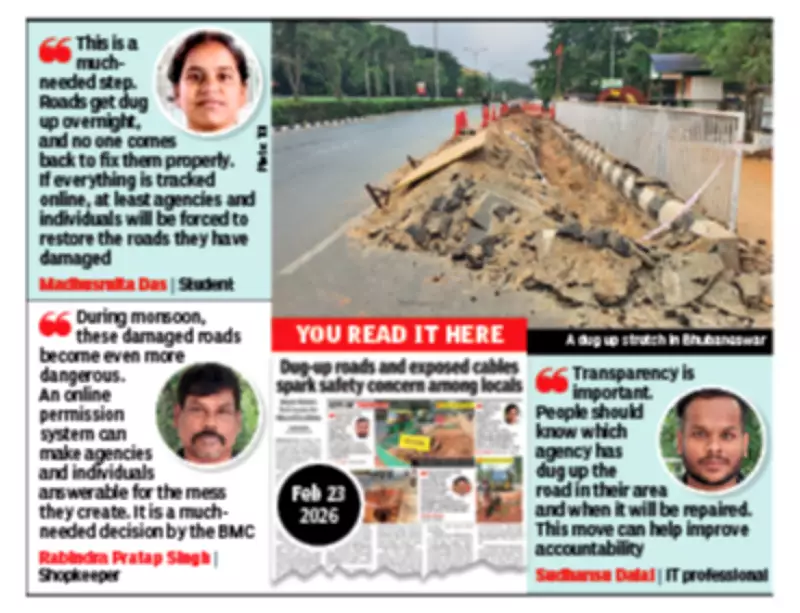
The new mandate comes as a direct response to numerous public complaints regarding the poor state of road restoration following trenching activities. For years, agencies and individuals digging roads to lay pipelines, cables, or other utilities have frequently left these stretches either unattended or in a severely damaged condition for extended periods. This negligence has consistently led to significant traffic chaos and considerable inconvenience for daily commuters across Bhubaneswar.
According to an official order released by the BMC, this policy now applies to all agencies, including those involved in water supply, power distribution, telecommunication services, and cable television providers. The primary objective of this digital transition is to streamline the entire permission process while maintaining comprehensive and accurate records of all trenching activities throughout the city.

Enhanced Application Requirements and Monitoring
The online application process requires agencies and individuals to provide detailed information, including the exact location of the proposed digging, the specific purpose of the trenching work, the anticipated duration of the project, and most importantly, a thorough restoration plan for the road surface. BMC officials will meticulously verify all submitted details before granting or rejecting applications.
Bhubaneswar Mayor Sulochana Das emphasized that this initiative is fundamentally about ensuring greater accountability and transparency in civic operations. "Through this integrated online system, we will be able to systematically track which organization has dug which specific stretch of road, for what precise purpose, and whether proper restoration has been completed within the stipulated timeframe," Das explained. "Monitoring of repair work will now become an integral component of the entire approval process."
BMC officials have confirmed that concerned departments will process and monitor all applications digitally to ensure strict compliance with all stipulated conditions, with particular emphasis on the timely resurfacing of roads following work completion. The civic body has made it clear that any violations will result in appropriate legal action, with the new order taking immediate effect.
Public Support for the Digital Initiative
Road users throughout Bhubaneswar have largely welcomed this regulatory change, describing unattended trenches as a longstanding civic menace that has plagued the city's infrastructure. Anil Sahu, a resident of Nayapalli, expressed relief at the new measures. "Numerous roads across the city are dug up and then left in that hazardous state for months on end," Sahu noted. "This creates persistent traffic jams and poses serious safety risks, particularly during nighttime hours. If the BMC can effectively track and enforce proper restoration through this online system, it will provide substantial relief for daily commuters."
Another commuter, Priyanka Mohanty, highlighted that such accountability measures were long overdue. "There should definitely be penalties imposed if agencies fail to repair roads properly after completing their work," Mohanty stated. "An online tracking system could help fix responsibility more accurately. I sincerely hope all agencies and individuals will comply with the BMC's new direction, as this represents a potential long-term solution to a chronic problem."

This digital transformation in Bhubaneswar's civic governance reflects a broader trend toward technological integration in urban management, with the BMC positioning itself at the forefront of municipal innovation in Odisha. The success of this online permission system could potentially serve as a model for other Indian cities grappling with similar infrastructure maintenance challenges.





