

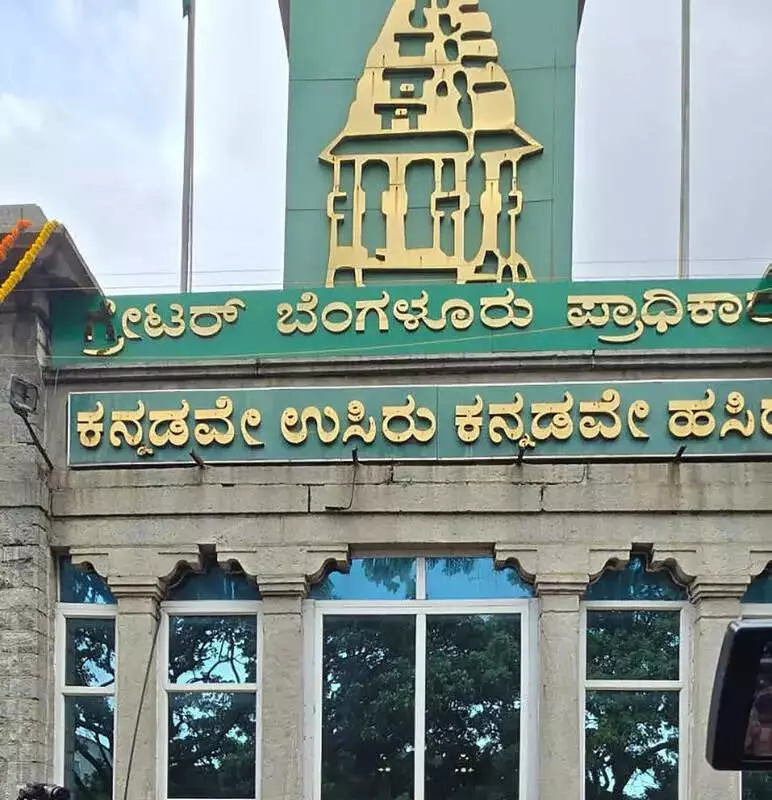
Bengaluru's New Oversight Panel Raises Questions on Civic Autonomy
The Karnataka state government has established a new empowered panel under the Greater Bengaluru Authority (GBA) to supervise development works across the city and ensure effective implementation of projects undertaken by the five newly formed municipal corporations. However, this move has sparked concerns about possible infringement on the autonomy of these civic bodies.
Background and Rationale for the Panel
The panel was approved by the cabinet earlier this month, following the cessation of the Bruhat Bengaluru Mahanagara Palike (BBMP) and the subsequent split of the city's civic administration into five separate corporations. With this restructuring, the government cited the presence of multiple committees, independent agencies, and the absence of a single oversight mechanism for development works across Bengaluru as key reasons for establishing the new panel.
While the GBA, chaired ex officio by the chief minister, has been vested with powers for overall planning and coordination, the newly constituted panel has been tasked with handling day-to-day affairs. This includes inspection, supervision, and approval of tenders for projects taken up by the five corporations as well as independent agencies operating across the city.

Key Agencies and Functions
Two major agencies functioning outside the jurisdiction of the five corporations are Bengaluru Solid Waste Management Limited (BSWML), responsible for lifting and disposal of all types of solid waste generated in the city, and Bengaluru Smart Infrastructure (B-Smile), which handles large-scale infrastructure projects. A government note justifying the panel stated:
"In the backdrop of all these developments, it is felt necessary to revise the empowered committee constituted under the chairmanship of the additional chief secretary to the government, urban development department... to carry out inspection and supervision and to accord approvals to all types of tenders with regard to work/projects implemented under the state and central government grants, state and central finance commission grants, own funds and other grants by five corporations, B-Smile and BSWML coming under the jurisdiction of GBA."
The panel has been described as a mechanism to "enable speedy implementation of projects and works keeping with the vast scope and complex system of Bengaluru."
Composition and Oversight Role
The empowered committee will have 23 members, including:
- The commissioners and chief engineers of the new corporations
- The chief engineers of GBA
- Managing directors of BSWML and B-Smile
- Public works department secretary
- Finance (expenditure) secretary
- Other senior officials
The committee will oversee tenders called for projects across Bengaluru. However, the government has not clarified whether the panel's role will overlap with or influence the independent functioning of the five corporations and the decisions taken by their elected political heads.
Concerns About Civic Autonomy
GBA House Committee chairperson Rizwan Arshad maintained that the autonomy of the corporations cannot be diluted. He explained:
"While the corporations are independent and free to call for tenders, the process of a committee approving them has been in place even during the BBMP days as the government needs to be apprised of the works carried out. The revised panel now includes the independent agencies and also the five corporation representatives to ensure that all projects in the city are looked into."
This statement highlights the delicate balance between centralized oversight and local autonomy that the new panel aims to achieve. The inclusion of corporation representatives in the committee is seen as an attempt to maintain transparency and coordination while addressing concerns about potential overreach.
The establishment of this oversight mechanism represents a significant shift in Bengaluru's governance structure, with implications for how development projects are planned, approved, and implemented across India's technology capital.






