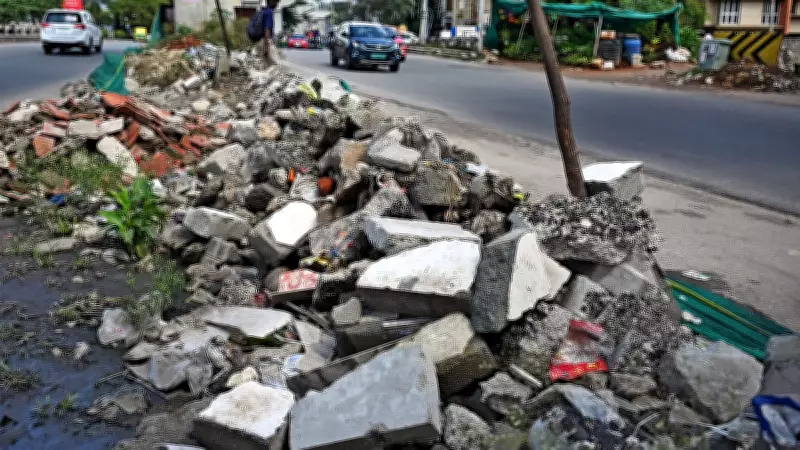
A newly formed committee by the Bruhat Bengaluru Mahanagara Palike (BBMP) to fix fees for processing construction and demolition (C&D) waste has come under fire for excluding resident welfare associations and citizen groups. The panel, constituted on March 15, comprises only BBMP officials and representatives from the construction industry, leaving no room for consumer voices.
Committee Composition and Purpose
The 12-member committee is tasked with determining the charges that builders and homeowners must pay for the processing of C&D waste at designated facilities. According to a BBMP order, the panel includes the chief engineer of the solid waste management department, zonal joint commissioners, and members from the Karnataka Builders Association, the Confederation of Real Estate Developers' Associations of India (CREDAI), and the Indian Institute of Architects.
Notably absent are representatives from resident welfare associations or citizen groups, who are the primary users of these services. Activists argue that this oversight undermines the committee's credibility and could lead to unfair pricing.

Criticism from Civic Activists
“The BBMP has failed to include the very people who will pay these fees,” said a prominent civic activist from Bengaluru. “Without resident representation, the process lacks transparency and accountability. The committee should have diverse stakeholders to ensure equitable charges.”
Activists also pointed out that the BBMP had previously promised to involve citizens in decision-making on waste management. The exclusion, they say, goes against the principles of participatory governance.
Background on C&D Waste Management in Bengaluru
Bengaluru generates approximately 2,000 tonnes of C&D waste daily, a figure that has risen sharply due to rapid urbanization. In 2023, the BBMP mandated that all C&D waste must be processed at authorized facilities, with fees to be determined by the new committee. However, the current fee structure has been criticized for being arbitrary and inconsistent across zones.
The committee is expected to submit its recommendations within three months. Until then, the existing fee system remains in place, which many residents find burdensome.
Demand for Revision
Resident welfare associations have demanded that the BBMP reconstitute the panel to include their representatives. They have also called for a public consultation before any fee hike is implemented. “We are not against paying for waste processing, but the process must be fair and transparent,” said a member of a north Bengaluru RWA.
The BBMP has not yet responded to these demands. However, sources indicate that the corporation may consider expanding the committee if pressure mounts.
Way Forward
Experts suggest that involving residents could lead to better compliance and more efficient waste management. “When people have a say in the fees, they are more likely to pay and follow the rules,” said a waste management consultant. “The BBMP should take this as an opportunity to build trust with citizens.”
As the committee begins its work, all eyes are on the BBMP to see if it will address the glaring omission of user representatives. The outcome could set a precedent for how civic bodies engage with residents on critical issues.