The 2026 assembly election results have unveiled three defining trends that are reshaping India's political battleground. The Bharatiya Janata Party (BJP) has made significant inroads in West Bengal, the Tamilaga Vettri Kazhagam (TVK) has emerged as a formidable force in Tamil Nadu, and the Left parties have suffered a major setback across multiple states. These developments signal a shift in voter preferences and coalition dynamics ahead of the next general election.
BJP's Surge in West Bengal
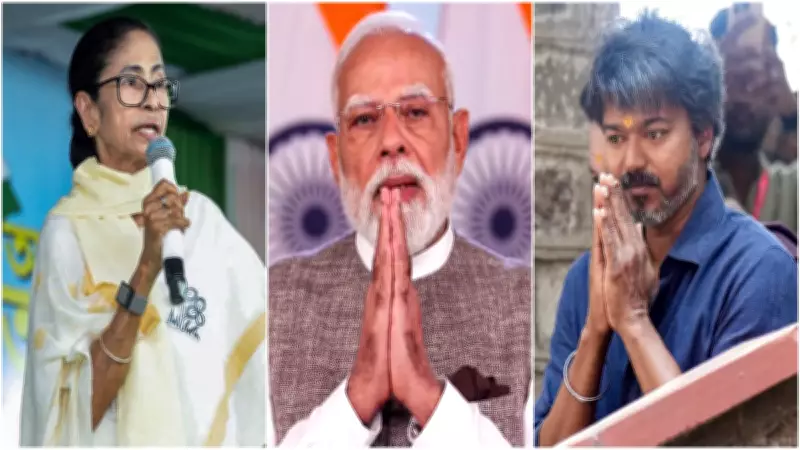
In West Bengal, the BJP has managed to increase its vote share and seat count, posing a serious challenge to the ruling Trinamool Congress (TMC). The party's focused campaign on issues of corruption and development, led by Prime Minister Narendra Modi and Home Minister Amit Shah, resonated with voters in urban and semi-urban areas. The BJP also gained ground in previously Left-dominated districts, capitalizing on anti-incumbency against the TMC. However, the TMC retained its stronghold in rural Bengal, ensuring a tight contest.
TVK's Rise in Tamil Nadu
In Tamil Nadu, the TVK, led by actor-turned-politician Vijay, has emerged as a major political force, winning a significant number of seats and securing a substantial vote share. The party's appeal to youth and first-time voters, combined with its anti-corruption stance, disrupted the traditional Dravidian party dominance. The DMK and AIADMK both lost ground, with the DMK managing to form a government only with the support of smaller allies. The TVK's performance has positioned it as a key player in future state and national elections.

Setback for the Left
The Left parties, particularly the Communist Party of India (Marxist) [CPI(M)], faced a severe setback across states like Kerala, West Bengal, and Tripura. In Kerala, the Left Democratic Front (LDF) lost power to the Congress-led United Democratic Front (UDF) due to internal factionalism and voter fatigue. In West Bengal, the Left's vote share dwindled further as voters gravitated toward the BJP and TMC. In Tripura, the Left failed to regain its earlier stronghold, with the BJP retaining power. Analysts attribute this decline to the Left's inability to adapt to changing voter aspirations and its lack of a credible national alternative.
These three trends underscore a fragmented yet dynamic political landscape, with regional players gaining prominence and national parties recalibrating their strategies. The results also highlight the growing importance of local issues and charismatic leadership in shaping electoral outcomes. As India moves toward the 2029 general elections, these trends will likely influence coalition-building and policy agendas.