

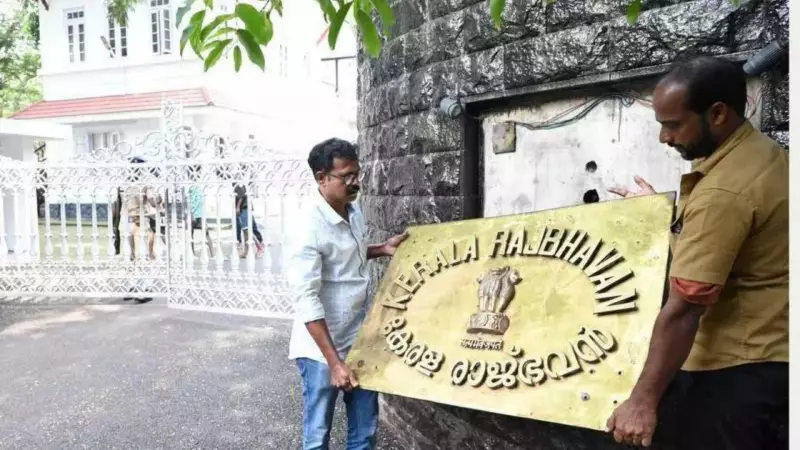
In a significant move to distance official institutions from India's colonial history, eight states and one Union Territory have officially changed the name of their governor or lieutenant governor's official residence and office. The change, from the traditional 'Raj Bhavan' or 'Raj Niwas' to 'Lok Bhavan' and 'Lok Niwas', follows a directive from the Ministry of Home Affairs (MHA).
The Directive from the Ministry of Home Affairs
The push for this symbolic change originated from a suggestion made during the conference of governors held last year. Participants argued that the term 'Raj Bhavan' carries colonial connotations that are no longer appropriate for a democratic nation. Acting on this suggestion, the MHA issued a formal letter to the principal secretaries of state governors and lieutenant governors of Union Territories.
The ministry's communication clearly stated the new policy. "Accordingly, it is requested that offices of governor and office of Lt governor may be named as 'Lok Bhavan' and 'Lok Niwas', respectively, for all official purposes," the directive read. The word 'Lok', meaning 'people' in Hindi, is intended to reflect a more people-centric ethos for these institutions.

States and UT Implementing the Change
Heeding the central government's advice, several administrations have swiftly implemented the nomenclature shift. The states that have effected the change so far include:
- West Bengal
- Tamil Nadu
- Kerala
- Assam
- Uttarakhand
- Odisha
- Gujarat
- Tripura
In the Union Territory of Ladakh, the official residence and office of Lieutenant Governor Kavinder Gupta, previously known as Raj Niwas, has been renamed 'Lok Niwas'.
Part of a Broader De-Colonization Drive
This renaming exercise is not an isolated event but part of a consistent effort by the Modi government to shed vestiges of the British colonial past. This initiative has seen several high-profile changes in recent years.
The iconic Rajpath in New Delhi was renamed Kartavya Path, symbolizing duty over rule. In official communications, the government has increasingly preferred 'Bharat' over 'India'. A noticeable shift has also occurred on government websites, where content now primarily loads in Hindi, with English as an optional language.
Even cultural ceremonies have been revisited. The band at the annual Beating Retreat ceremony on Republic Day no longer plays the English hymn 'Abide with Me', a tradition from the colonial era, marking a move towards music with indigenous roots.
The renaming of these gubernatorial residences to Lok Bhavan represents a conscious step in reimagining India's symbols of governance. It aims to replace terminology associated with imperial rule with words that resonate with the spirit of the republic and its people.






