DoPT Annual Report Highlights Significant Representation Gaps in Government Employment
The Department of Personnel and Training's (DoPT) annual report for 2024-2025 has revealed stark disparities in the representation of Scheduled Castes (SC), Scheduled Tribes (ST), and Other Backward Classes (OBC) across different categories of government employment. The data shows these groups are disproportionately concentrated in lower-grade positions, particularly sanitation work, while their presence in higher administrative roles remains limited.
Sanitation Workers Dominated by SC/ST/OBC Employees
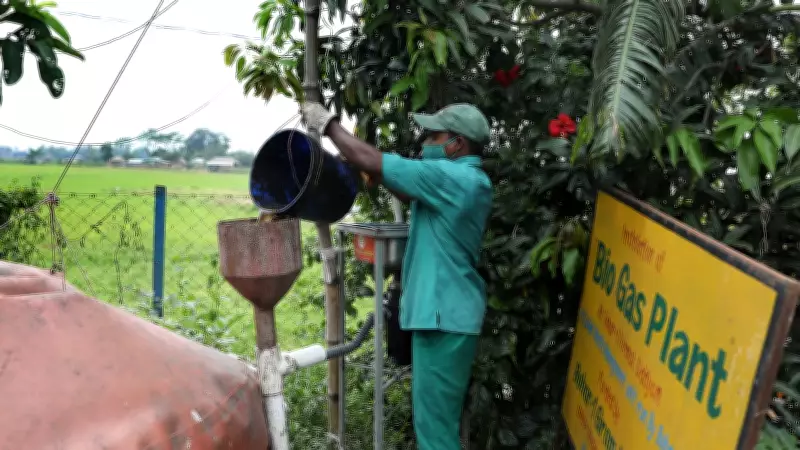
According to the comprehensive report covering 80 Union ministries and departments, SC, ST, and OBC workers collectively accounted for 66% of all sanitation workers employed in Group C posts. This translates to 26,886 out of the total 40,737 safai karamcharis across the surveyed government entities.
The breakdown reveals that SC employees alone constituted 36.75% of sanitation workers, followed by OBC employees at 21.15%, and ST employees at 8.18%. This concentration in sanitation roles stands in sharp contrast to their representation in other employment categories.

Lower Representation in Higher Administrative Grades
The report indicates that while SC, ST, and OBC employees make up 52% of the total 32.52 lakh government employees across all categories, their representation decreases significantly in higher administrative positions:
- Group A Posts: These groups constituted only 40% of the 1.19 lakh employees in top administrative positions, with SC at 14.20%, ST at 6.54%, and OBC at 19.14%.
- Group B Posts: In middle-level positions, they accounted for 46% of the 3.64 lakh employees, with SC at 16.20%, ST at 7.63%, and OBC at 21.95%.
- Other Group C Posts: Excluding sanitation workers, these groups made up 53% of employees in other Group C positions.
Historical Trends Show Persistent Patterns
The current findings align with previous DoPT reports that documented similar representation patterns over recent years:
- In 2022, 60% of sanitation workers across 75 ministries and departments came from SC, ST, and OBC communities.
- In 2021, the percentage stood at 59% across 72 ministries and departments.
These consistent figures suggest structural factors contributing to the concentration of marginalized communities in sanitation roles rather than isolated annual variations.
Government Reservation Policy Context
The government's reservation policy mandates 15% for SCs, 7.5% for STs, and 27% for OBCs in direct recruitment through open competition on an all-India basis. The current representation figures, particularly in higher grades, indicate implementation challenges in achieving these targets across all employment categories.
Broader Implications for Manual Scavenging
The report's findings gain additional significance when viewed alongside previous government data on manual scavenging. In December 2021, Social Justice and Empowerment Minister Ramdas Athawale informed the Rajya Sabha that while no specific study had been conducted on the caste backgrounds of manual scavengers, available data showed overwhelming representation from marginalized communities.
Under the Prohibition of Employment as Manual Scavengers and their Rehabilitation Act, 2013, the government identified 58,098 manual scavengers. Among the 43,797 individuals with available caste data:
- 42,594 (97%) were from Scheduled Castes
- 421 were from Scheduled Tribes
- 431 were from Other Backward Classes
- 351 belonged to other categories
This historical context underscores how caste-based occupational patterns continue to influence employment distribution in government sectors, particularly in sanitation-related work.
The DoPT report serves as a crucial document highlighting the need for more effective implementation of reservation policies and targeted interventions to address representation gaps across different levels of government employment. The data calls for renewed focus on creating equitable opportunities and breaking historical patterns of occupational segregation based on social categories.