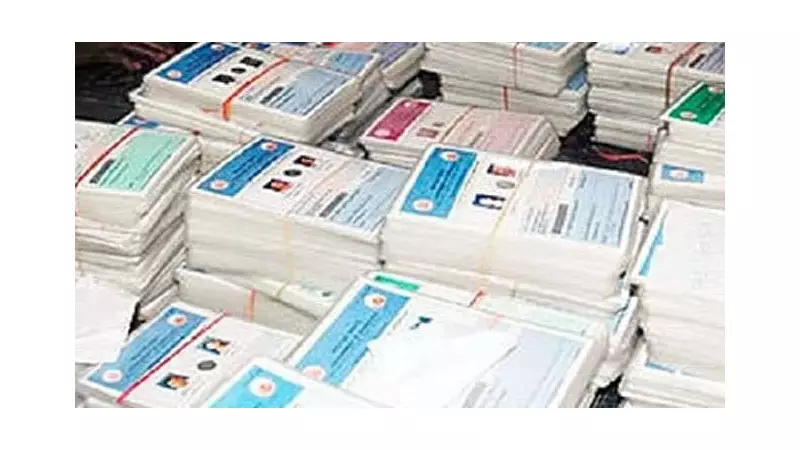
The Karnataka government has undertaken a significant drive to clean up its Public Distribution System (PDS), cancelling a massive number of fraudulent or ineligible ration cards over the last half-decade. Official data from the Centre reveals that a staggering 2.34 lakh ineligible ration cards have been cancelled in Karnataka in the last five years.
Data-Driven Crackdown on Fraud
This large-scale cancellation is the result of a sustained effort using technology and comprehensive data analysis. The process aims to identify beneficiaries who do not meet the eligibility criteria for the subsidised food grain scheme. In the current financial year, 2024–25, the state's Food and Civil Supplies Department has actively continued this process, scrutinising records to weed out irregularities.
The initiative is part of a broader national effort to make the PDS more efficient and transparent. By leveraging data analytics, authorities can cross-reference details to spot duplicates, cards issued to deceased individuals, or families whose income levels now disqualify them from the benefits.

Impact on the Public Distribution System
The cancellation of such a high volume of cards has several important implications. Primarily, it ensures that government subsidies reach the intended beneficiaries—the truly needy and eligible families. This streamlines the system, reduces leakages, and results in substantial financial savings for the state exchequer.
Furthermore, a cleaner database allows for better planning and allocation of food grains. Officials can now base their distribution plans on accurate data, preventing shortages in some areas and gluts in others. This move strengthens the core objective of the National Food Security Act, which is to provide food security to the population.
Ongoing Vigilance and Future Steps
The cancellation process is not a one-time event but an ongoing exercise. The department employs continuous monitoring and encourages citizens to report any discrepancies they find. The use of Aadhaar seeding with ration cards has been a pivotal tool in this verification drive, helping to create a unique and foolproof identification system for beneficiaries.
As the department moves forward, the focus will remain on maintaining an accurate and dynamic database. The goal is to ensure that the Public Distribution System in Karnataka is robust, corruption-free, and serves as a reliable safety net for its citizens, as highlighted in the recent update. This systematic cleanup reflects the state's commitment to good governance and efficient resource management.