Pune Municipal Corporation Polls Highlight Accessibility Woes for Elderly Voters
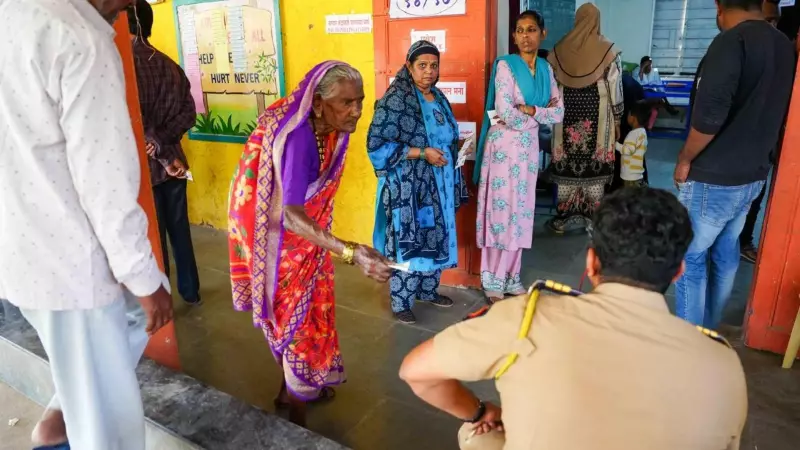
The Pune Municipal Corporation elections on January 15 presented a stark contrast to previous voting initiatives. Unlike the state assembly elections in November 2024, which featured a special home voting program for senior citizens and persons with disabilities, this civic poll offered no such facility. This omission forced many elderly residents to navigate physical polling stations, often encountering significant obstacles.
Wheelchair Woes and Long Waits
At the Kroot Memorial School polling station in Azad Nagar, Animesh Mantravadi faced a frustrating delay. He had to wait for some time before securing a wheelchair for his 80-year-old father, Vijay, who suffers from a paralytic condition. "Despite his ailment, he was determined to vote," Animesh explained, highlighting the family's perseverance.
Similar scenes unfolded across Wanowrie. Seventy-five-year-old Susheela Banave stood patiently with her walking frame on Shivarkar Road. Her grandson, Shivam, eventually found a wheelchair at the Mahadji Shinde school polling station. Reports from the area indicated that not only were wheelchairs delayed, but some were also non-functional. Several seniors, unable to wait, abandoned the support and slowly walked the long distance from the gate to the polling booth.

Municipal health officials stated they had deployed resources. Dr. Suryakant Deokar, Assistant Medical Officer for PMC, confirmed that wheelchairs were provided across all 932 polling centers. Dr. Ketaki Ghatge, the Ward Medical Officer for Wanowrie, noted that 65 wheelchairs were stationed at buildings hosting polling stations. She acknowledged that some chairs were old but claimed the issue was addressed promptly after her visit to concerned centers.
Confusion Over Voting Procedures
Beyond physical access, the voting process itself proved confusing for many. At the Moreshwar Sabhagruha booth in Dattawadi, Dilip Kolhe, 73, pointed out a procedural flaw. Voters were required to cast four votes, but only three voting machines were available. "The machines were color-coded. We had to cast one vote on each of the first two machines and two votes on the third," he described. While he managed, he observed others struggling, suggesting that four separate machines would have simplified the process.
Another voter at the same location, Satish, 78, echoed this sentiment. "The requirement to cast four votes was confusing and did not make sense," he said, calling the change from earlier systems chaotic. He expressed broader disappointment with political promises, noting that pre-election assurances often fade once candidates are elected.
Mixed Experiences and Systemic Gaps
Voter experiences varied, revealing inconsistent implementation. In Erandwane, some PWD voters and seniors received smooth wheelchair support. Mandakini Dandnaik, 85, voting at Moreshwar Sabhagruha, reported a well-managed, ten-minute process where she was given priority assistance. She emphasized voting as both a privilege and a responsibility.
However, other cases highlighted systemic failures. At Abhinav Vidyalaya, senior couple Sandhya and Deepak Bhadkambkar, aged 74 and 75, were erroneously assigned to different polling booths despite providing correct details. "As senior citizens, we shouldn't have been split," they remarked.
Satish Rajpathak, 69, found the voting process largely smooth but criticized the age limit for priority help. "Assistance is given only to voters above 75 or 80. People above 60 who need help should also be considered," he argued.
Determination Amid Disappointment
Despite the hurdles, many seniors displayed unwavering commitment. Umesh Gogate, 68, spent hours searching Baner for his correct polling booth, only to find neither his nor his wife's name on the voter lists at several locations. A booth official admitted to many such cases throughout the day.
Conversely, octogenarians Anuradha Pol and Anuradha Agharkar, both with perfect voting records, expressed satisfaction. They praised the staff for being kind and patient. "Youth must vote too. It's not a privilege, it's a duty," they smiled, reinforcing the civic message.

The Pune municipal elections thus painted a complex picture. While some elderly voters navigated the process successfully, many others faced tangible barriers of accessibility and clarity, underscoring the need for more reliable and inclusive electoral arrangements.