The Election Commission (EC) has confirmed that not a single repoll has been recommended across the 44,376 polling stations in West Bengal and the 75,064 polling stations in Tamil Nadu, according to sources on Friday. This marks a significant departure from previous elections, particularly in West Bengal, where multiple repolls were often ordered due to political violence and alleged electoral malpractices.
High Voter Turnout
Both states recorded their highest ever polling percentages on Thursday. West Bengal saw a turnout of nearly 92.9% in the first phase after the deletion of approximately 83 lakh electors from the state's electoral rolls due to the Special Summary Revision (SIR).
Three-Point Verification System
A stringent three-point verification process was implemented at all polling stations in West Bengal on Thursday to curb electoral malpractices commonly referred to as 'chaapa', 'source jamming', and 'booth jamming'.

First Verification Point: The area immediately surrounding the polling station was secured. Section 163 of the BNSS (corresponding to Section 144 of the erstwhile IPC) was imposed within a 200-metre radius of polling stations. Identity papers of every person entering this zone were checked, allowing only genuine electors, election officials, and authorized personnel.
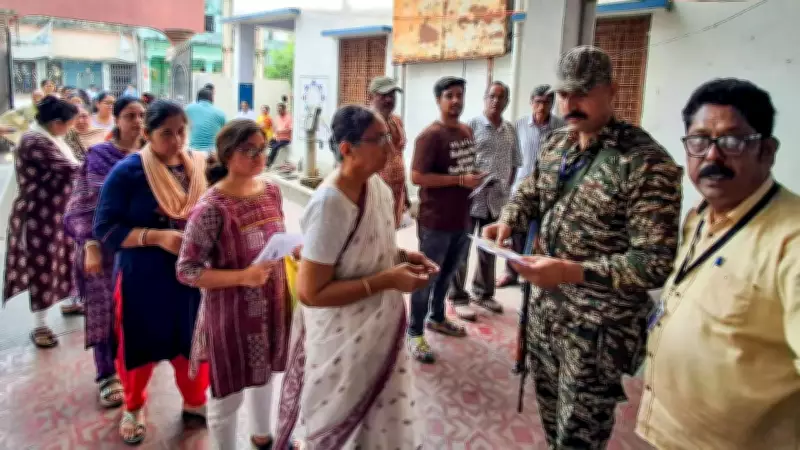
Second Verification Point: At the entry to the polling station, booth-level officers along with volunteers from NSS and NCC verified each person before they could join the queue. This included verifying the identity of 'pardanasheen' women (those wearing face veils for religious reasons) by female staff, who checked identity cards, voter cards, or voter slips.
Third Verification Point: Inside the polling booth, the polling officer conducted the standard identity check before the elector received ink on their finger and cast their vote.
This comprehensive verification system ensured a smooth and fair voting process, eliminating the need for any repolls.