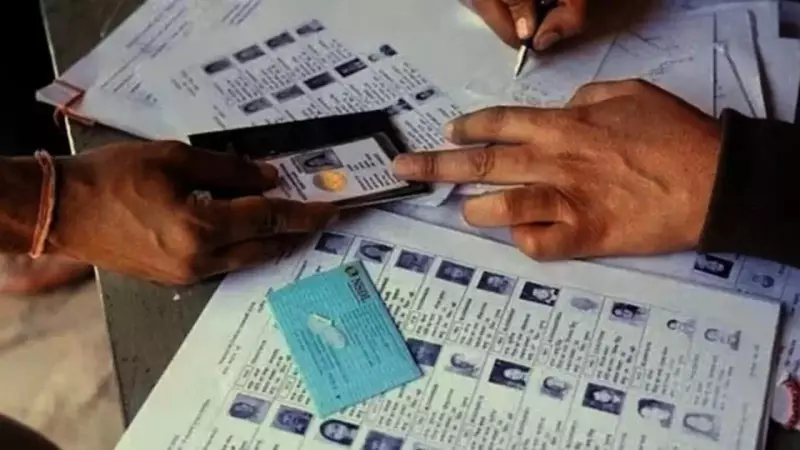
The Election Commission's latest voter list cleanup has led to a significant reduction in the number of electors in two major states. The draft electoral rolls published for Tamil Nadu and Gujarat under the second phase of the Special Intensive Revision (SIR) exercise have witnessed the deletion of 97.3 lakh and 73.7 lakh names, respectively. Furthermore, a staggering 1.2 crore electors in each state are set to receive official notices concerning irregularities found in their enrollment details.
Sharp Decline in Tamil Nadu's Electorate
The electoral landscape in Tamil Nadu has undergone a dramatic change. The state's total electorate has shrunk from 6.4 crore as recorded on October 29, 2025, to approximately 5.4 crore in the new draft roll. This reduction of one crore voters is attributed to several specific reasons. Officials have marked 26.9 lakh electors as deceased, while another 66.4 lakh have been classified as having shifted or being absent. Additionally, close to 4 lakh individuals were found to be enrolled in multiple locations.
Gujarat's Voter List Sees Similar Pruning
The story is similar in Gujarat, where the draft electoral roll now lists just over 4.3 crore electors. This is a substantial drop from the nearly 5.1 crore names present on the list from October last year. The deletions account for around 18.1 lakh deceased voters, 51.8 lakh who have shifted or are absent, and 3.8 lakh duplicate entries. The scale of the cleanup highlights the rigorous nature of the SIR exercise aimed at creating more accurate voter databases.

Widespread 'Logical Discrepancies' Trigger Notices
Beyond the deletions, a major focus of the revision is on correcting data anomalies. Enumeration forms submitted by over 1.2 crore electors in each state have shown what the Commission terms 'logical discrepancies'. These inconsistencies warrant formal notices from the Electoral Registration Officer (ERO), who will seek explanations and possibly documentary proof to establish eligibility.
The discrepancies flagged include a wide range of issues:
- More than six progeny linked to the same parent in the roll from the last SIR.
- Electors aged over 45 years who have never enrolled before.
- Mismatches in father's name.
- Electors showing an age difference of less than 15 years or more than 50 years with a parent.
- An age difference of less than 40 years with a grandparent.
Process for Claims, Objections, and Appeals
The draft rolls are now open for public scrutiny. Electors or political party Booth Level Agents (BLAs) in both Tamil Nadu and Gujarat can file claims and objections until January 18. The Election Commission has emphasized that no name can be deleted from the final roll without a formal notice and a reasoned 'speaking order' from the ERO or Assistant Electoral Registration Officer (AERO).
Any voter who feels aggrieved by a decision has the right to appeal. The first appeal can be made to the district magistrate. If unsatisfied, a further appeal can be lodged with the chief electoral officer of the concerned state or union territory, a process that remains available even after the publication of the final electoral roll.
This extensive revision drive underscores the Election Commission's ongoing effort to purify the electoral rolls, ensuring they are free from errors, duplicates, and ineligible entries ahead of future polls.