The Election Commission of India (ECI) is gearing up to announce a Special Intensive Revision (SIR) of the electoral roll in Delhi, according to official sources. This comprehensive exercise, aimed at cleaning and updating the voter list, follows a nationwide plan announced by the ECI on June 24.
Preparations in Full Swing Across the Capital
Delhi's Chief Electoral Officer (CEO), Alice Vaz, had indicated in September that preparations for the SIR had commenced in the city. While an official schedule for Delhi is pending, groundwork is actively underway. The SIR process has already been rolled out in Bihar and nine other states along with three Union Territories.
In Delhi, all necessary administrative steps have been taken. Booth Level Officers (BLOs) have been appointed for every Assembly constituency and have received training alongside other election officials like District Election Officers and Electoral Registration Officers. A critical part of the preparation has been the mapping of current constituency boundaries, referencing the last SIR conducted in the capital in 2002.

BLOs have initiated public outreach by forming Booth Awareness Groups, often on platforms like WhatsApp, and engaging with Resident Welfare Associations (RWAs). The purpose is to inform citizens about the upcoming revision process and guide them on how to ensure their voter registration is correct.
What Delhi Voters Must Do Now
The outreach messages from BLOs contain specific instructions for residents, categorizing them based on their history in Delhi:
For residents above 40 years old who were living in Delhi before 2002: They are advised to check their names in the 2002 voter list available on the Delhi CEO's website. They should note down the details as they appear in that old list and keep the information ready to share with their BLO.
For those who moved to Delhi from another state after 2002: Their names will not be in Delhi's 2002 list. Instead, they need to visit the CEO website of their native state and find their details from the voter list of the year when the last SIR was held there (e.g., 2002, 2003, or 2005). This information must also be kept handy for the BLO.
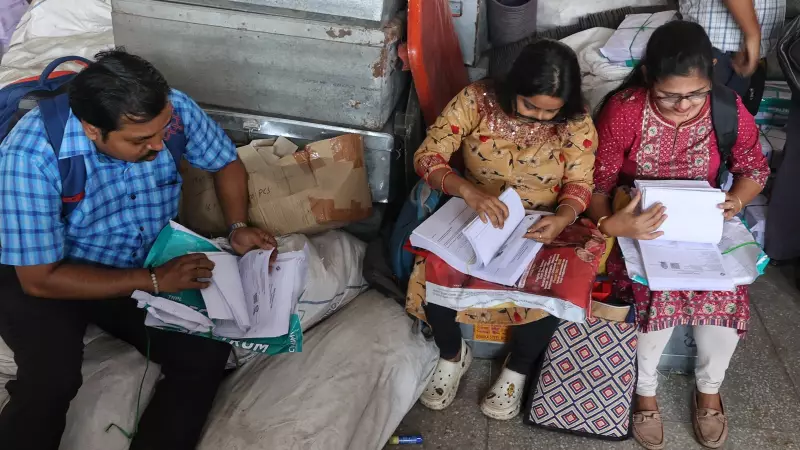
This data collection will assist BLOs during the door-to-door distribution and collection of enumeration forms once the SIR is formally announced.
Political Parties and Past Controversies
Concurrently, political parties are preparing their own machinery. They are in the process of appointing and training Booth-Level Agents (BLAs) to monitor the revision exercise. AAP's Delhi chief, Saurabh Bharadwaj, stated that their BLA 1s (constituency-level agents) are appointed and trained, and they are now working on BLA 2s (booth-level agents). Delhi Congress chief Devender Yadav also confirmed appointments and emphasized vigilance in areas with high concentrations of minority and Dalit voters.
The SIR exercise has been under scrutiny due to past controversies. Earlier this year, it sparked a political row in Bihar over allegations of mass deletion of voter names. The ongoing second phase in other states has also faced criticism, with BLOs—often government officials or teachers taking on extra duties—reporting a high workload. Tragically, suicides by some BLOs have brought the pressures of the role into focus.
A BLO from Trinagar, speaking anonymously, revealed that while fieldwork hasn't started, they have been working for the past two months tracing new voters and checking the 2002-03 voter history of current residents, having undergone three training sessions.
As Delhi awaits the official announcement, the message for residents is clear: proactive verification of past voter records is crucial for a smooth enrollment process in the upcoming Special Intensive Revision.