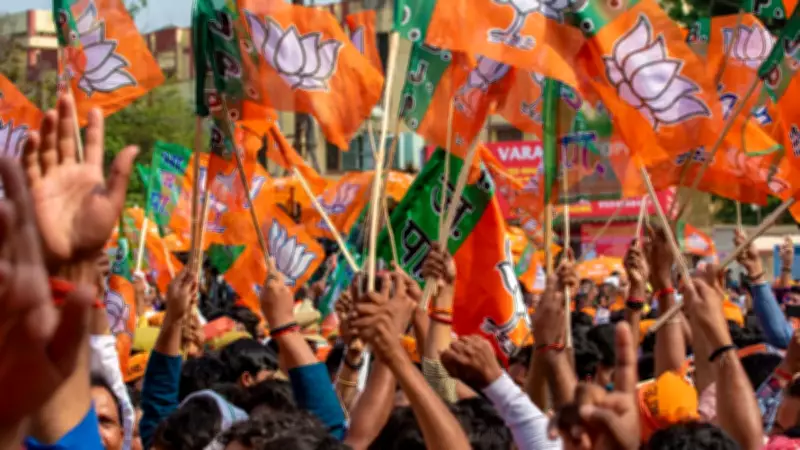
In a dramatic twist to India's political landscape, West Bengal has begun its tryst with the Bharatiya Janata Party (BJP), marking a seismic shift from decades of regional dominance by the Trinamool Congress. The 2026 election results have reshaped the country's political map, with significant developments across multiple states.
West Bengal: BJP Triumphs
The BJP secured a decisive victory in West Bengal, ending the Trinamool Congress's long-standing rule. Mamata Banerjee faced a tough challenge from Suvendu Adhikari, who emerged as a key figure in the BJP's campaign. The results reflect a major realignment in the state's political dynamics.
Tamil Nadu: TVK Emerges as a Formidable Force
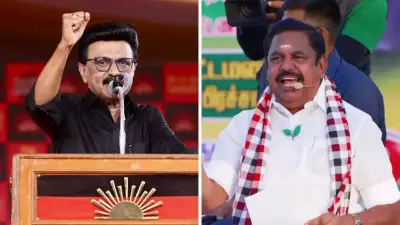
In Tamil Nadu, the newly formed TVK party, led by Vijay, won over 100 seats, reshaping southern politics. The DMK and AIADMK were pushed to the margins, as TVK capitalized on anti-incumbency and a wave of support. The party's journey from a fledgling movement to a major political force has been remarkable.

Kerala: UDF Returns to Power
Kerala witnessed a triumphant return of the Congress-led United Democratic Front (UDF), which ousted the LDF government. The UDF's victory was driven by strong alliances and effective campaigning, marking a shift in the state's political landscape.
Assam and Puducherry: NDA Holds Steady
Assam and Puducherry remained steadfast with the National Democratic Alliance (NDA), retaining power through strong governance and coalition strategies.
India's Political Map: A New Reality
With the latest election results, India's political map has changed drastically. The BJP now directly governs 16 states: West Bengal, Delhi, Haryana, Madhya Pradesh, Rajasthan, Gujarat, Uttar Pradesh, Maharashtra, Assam, Odisha, Chhattisgarh, Tripura, Goa, Arunachal Pradesh, Manipur, and Uttarakhand. The NDA, including allies such as the TDP-led Andhra Pradesh, JD(U)-led Bihar, and regional partners in Meghalaya, Sikkim, and Nagaland, raises the tally to 21 states.
The Congress improved its tally and now directly controls four states: Kerala, Himachal Pradesh, Telangana, and Karnataka. The INDIA bloc adds two more states: Jharkhand and Jammu & Kashmir.
Key Numbers
The NDA governs 21 states, accounting for nearly 73% of India's total area, with around 110 crore people (78% of India's population) living in these states. The Congress and INDIA bloc govern six states, covering about 18% of India's area, with around 19 crore people (roughly 14% of the population).
These results underscore a significant shift in voter preferences, with regional parties and alliances playing a crucial role in shaping the country's political future.