

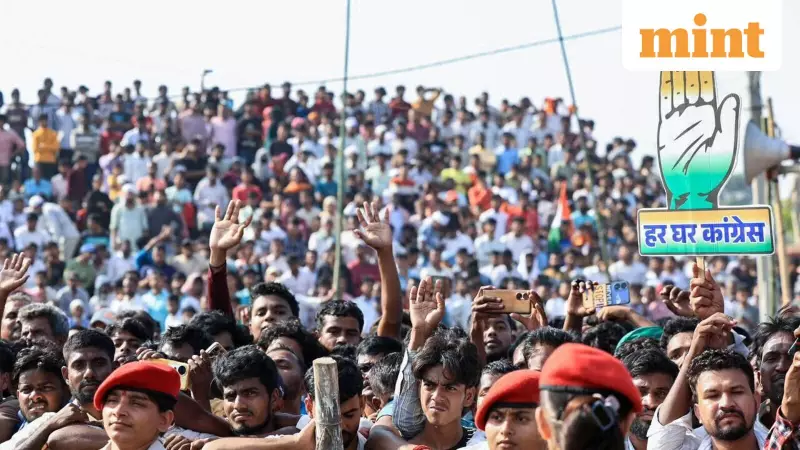
Bihar's Final Electoral Battle: All Eyes on Seemanchal
The second and final phase of the Bihar Assembly Elections 2025 is set for November 11, deciding the fate of the remaining 122 constituencies. The electoral outcome will be officially declared on November 14, marking a crucial moment for the state's political future.
This decisive phase brings into focus the 24 seats of the Muslim-majority Seemanchal region, located in Bihar's northeastern corner. This strategically important area shares borders with West Bengal, Nepal, and Bangladesh, encompassing four key districts: Araria, Purnea, Kataria, and Kishanganj.
Kishanganj: The Epicenter of Political Fluidity
Kishanganj, distinguished by having the highest Muslim population concentration in Bihar, presents a fascinating microcosm of the state's volatile politics. The district's four assembly seats are witnessing intense contests, with many candidates having switched party allegiances, earning them the local moniker of 'Aya Rams and Gaya Rams'.

The political landscape here remains particularly fluid. In the 2020 elections, Asaduddin Owaisi’s All India Majlis-e-Ittehadul Muslimeen (AIMIM) made significant inroads by winning five seats in Bihar, all within Seemanchal. Three of these victories were in Kishanganj district, with the other two in Purnea. However, in a major political shift, four of these five AIMIM MLAs subsequently left the party to join the Rashtriya Janata Dal (RJD).
The sole AIMIM legislator who remained with the party was Akhtarul Iman, the party's Bihar president, who secured his victory from the Amour seat.
Constituency-Wise Breakdown: A Tale of Defections and New Alliances
1. Kishanganj
This constituency witnessed Congress candidate Izharul Hasan emerge victorious in 2020. The BJP's Sweety Singh secured the second position, while AIMIM's Qamrul Hoda finished third. In a dramatic turn of events, Hoda, after briefly joining the RJD post his 2020 defeat, has now switched to the Congress and is their official candidate for 2025. The sitting MLA, Hasan, has been denied a ticket. Hoda now faces a triangular contest against Sweety Singh of the BJP and Shams Aghaz of the AIMIM.
2. Bahadurganj
In 2020, M Anzar Nayeemi won this seat for the AIMIM but soon defected to the RJD. For the 2025 polls, the RJD has denied him a ticket. Meanwhile, M Tauseef Alam, who previously contested on a Congress ticket and finished third in 2020, is now fighting the election as an AIMIM candidate. The Congress has fielded Masawar Alam, a leader with a history of affiliations with other parties.
3. Kochadhaman
Izhar Asfi of the AIMIM clinched this seat in 2020, defeating candidates from the RJD and JD(U). Mirroring a common trend, Asfi also joined the RJD after his victory. The RJD, however, has not renominated him for 2025. Instead, they have given the ticket to Mujahid Alam, a former JD(U) MLA who left that party in protest against the Waqf Amendment Bill. The AIMIM has fielded Sarvar Alam, previously associated with the RJD.
4. Thakurganj
The 2020 champion here was RJD's Saud Alam, son of former Congress MP Maulana Asrarul Haq. In this election, he is contesting against JD(U) leader and former MLA Gopal Agarwal and AIMIM's Ghulam Hasnain.
Key Electoral Takeaways
The political scenario in these constituencies underscores several critical trends. Frequent party affiliation changes are significantly impacting electoral outcomes, especially in regions with distinct demographic profiles like Seemanchal. The political landscape in Kishanganj remains exceptionally fluid, highlighting the critical importance of adaptability for candidates. Furthermore, these shifting allegiances reflect broader strategic movements within Bihar politics, indicating major recalibrations by parties ahead of these pivotal elections.






