Vice President's Personal Analogy on Iran Nuclear Policy Sparks Debate
During a press conference on the tarmac in Budapest, Hungary, US Vice President JD Vance employed a vivid analogy from his personal life to articulate the Biden administration's position on Iran's nuclear program. The discussion centered on whether the United States might permit Iran to continue enriching uranium for civilian purposes as part of a broader ceasefire agreement.
Clarifying US Demands in Nuclear Negotiations
When questioned about potential scenarios where Iran could retain enrichment capabilities, Vance outlined the administration's non-negotiable demands. "What the president has said is that we don't want Iran to have the capacity to build a nuclear weapon," Vance stated emphatically. "The president has also said that we don't want Iran enriching towards a nuclear weapon and we want Iran to give up the nuclear fuel. Those are going to be our demands during the negotiation."
The Skydiving Analogy: Rights Versus Actions
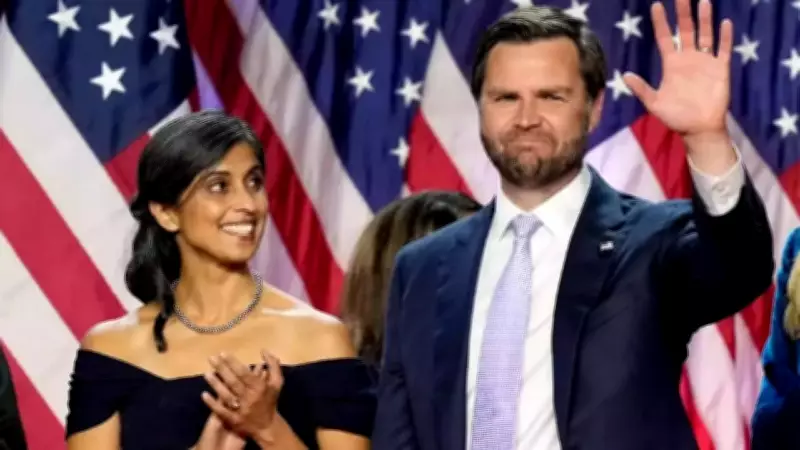
Vance's explanation took a personal turn when he referenced comments from Iranian Parliament speaker Mohammad Bagher Ghalibaf, who had emphasized "Iran's right to enrichment" in his country's 10-point peace proposal. To illustrate the distinction between theoretical rights and practical actions, Vance drew from his marriage to Second Lady Usha Vance.

"I thought to myself, you know what? My wife has the right to skydive, but she doesn't jump out of an airplane because she and I have an agreement that she's not going to do that because I don't want my wife jumping out of an airplane," Vance explained. The vice president emphasized that while Iran might claim enrichment rights, the crucial issue remains what actions the country actually takes regarding its nuclear program.
Social Media Backlash and Criticism
The unconventional comparison quickly ignited controversy across social media platforms, with many users expressing discomfort with the personal nature of the analogy. Critics argued that the comparison was insulting to both Usha Vance and Iran, suggesting it trivialized serious diplomatic matters through domestic references.
Observers noted that while Vance intended to clarify the administration's focus on verifiable actions rather than theoretical rights, the marriage analogy struck many as inappropriate for international diplomacy. The incident highlights the challenges political figures face when attempting to simplify complex foreign policy issues through personal narratives.
Broader Context of Iran Nuclear Negotiations
The exchange occurred against the backdrop of ongoing efforts to negotiate a ceasefire and address Iran's nuclear ambitions. The Biden administration has consistently maintained that preventing nuclear weapon development remains a top priority, even as diplomatic channels explore potential agreements.
Vance's comments underscore the delicate balance between acknowledging sovereign rights and enforcing non-proliferation standards in international relations. As negotiations continue, the administration's stance appears firmly focused on concrete outcomes rather than theoretical entitlements.