Vance Dismisses Long War Fears Over Potential Iran Strike
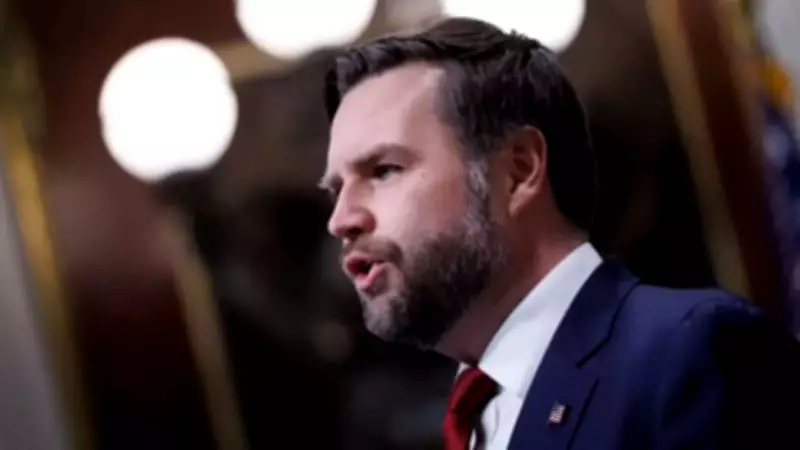
US Vice President JD Vance stated on Thursday that there is "no chance" any American military action against Iran would result in a protracted, drawn-out war. In an exclusive interview with The Washington Post, Vance outlined that President Donald Trump faces a critical choice between pursuing diplomatic channels or authorizing a military strike to prevent Iran from acquiring nuclear weapons.
"The idea that we're going to be in a Middle Eastern war for years with no end in sight—there is no chance that will happen," Vance emphasized, addressing widespread concerns about another lengthy conflict in the region.
Skepticism of Foreign Interventions and Diplomatic Preference
Vance, a 41-year-old Marine veteran who served during the Iraq War, reiterated his longstanding skepticism toward foreign military engagements. He revealed that both he and President Trump share a preference for diplomatic solutions over armed conflict. "We all prefer the diplomatic option," he affirmed during the discussion.

To illustrate his point, Vance referenced last year's targeted airstrikes on Iran's nuclear facilities and the January capture of Venezuelan President Nicolás Maduro as examples of what he termed "very clearly defined" military campaigns with specific objectives. From his experience in Iraq, where he later claimed from the Senate floor to have been "lied to" about the reasons for US involvement, Vance maintains a cautious stance. "I still see myself as a skeptic of foreign military interventions," he noted, adding, "But it really depends on what the Iranians do and what they say."
US Orders Nonessential Staff to Depart Israel Amid Rising Tensions
Concurrently, the US State Department has authorized the voluntary departure of nonessential personnel and their families from Israel, citing heightened safety risks due to escalating regional tensions. Similar guidance was previously issued for US staff stationed in Lebanon.
American citizens in Israel were urgently advised to "consider leaving while commercial flights are available." Ambassador Mike Huckabee directed embassy employees to "do so TODAY" to avoid potential flight shortages as the situation develops.
In a significant military buildup, the United States has deployed more than a dozen warships to the Middle East, including the USS Abraham Lincoln and USS Gerald R. Ford. This deployment marks the largest US naval presence in the region since the period leading up to the 2003 Iraq War, underscoring the gravity of the current geopolitical climate.
US-Iran Geneva Talks Conclude Without Breakthrough
Diplomatic negotiations between the United States and Iran concluded on Thursday in Geneva without achieving a breakthrough that could avert potential military action over Tehran's nuclear program. Oman's Foreign Minister Badr al-Busaidi, who mediated the talks, reported that the session ended after "significant progress" but failed to produce a final agreement.
Consultations are scheduled to continue in the respective capitals, with technical-level discussions expected to resume next week in Vienna. While both sides expressed cautious optimism about the tone of the negotiations, core disagreements persist, particularly regarding Iran's uranium enrichment activities and the relief of economic sanctions. These unresolved issues leave the threat of further escalation firmly on the table.
Iranian Foreign Minister Abbas Araghchi described the latest round of talks as more serious and prolonged compared to earlier sessions. However, he acknowledged that fundamental differences remain, highlighting the ongoing challenges in reaching a diplomatic resolution to the nuclear standoff.