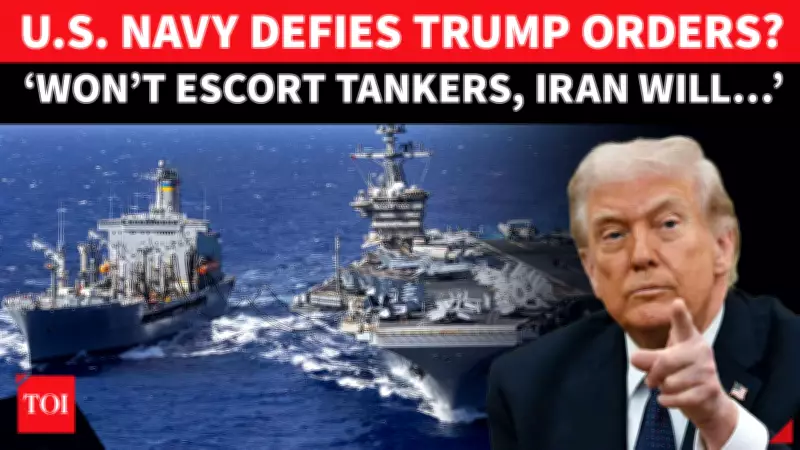
US Navy Declines Shipping Escort Requests in Strait of Hormuz, Contradicts Trump's Assurances
The US Navy has officially refused requests from the shipping industry for military escorts through the Strait of Hormuz, citing an assessment that the risk is too high. This decision directly contradicts repeated public assurances from President Trump, who had pledged that the Navy would escort tankers through the strategic waterway if necessary.
Operational Assessment vs. Political Promises
According to sources, the Navy informed industry counterparts that the operational threat level in the region makes escort missions untenable at this time. This stance highlights a significant divergence between military evaluations and political rhetoric, with the Navy prioritizing safety concerns over diplomatic assurances.
The contradiction was further amplified when Energy Secretary Chris Wright posted on social media platform X, claiming that a tanker had been successfully escorted through the strait. However, he later deleted the post after the claim could not be verified, adding to the confusion and underscoring the tense situation.

Iran's Response and Escalating Tensions
In response to the developments, Iran's Islamic Revolutionary Guard Corps (IRGC) labeled the escort claims as "a complete lie" and issued a stern warning. The IRGC stated that any movement of US fleets in the area would be met with missile and drone attacks, raising the stakes in an already volatile region.
The White House has maintained its position, holding the line despite the Navy's refusal and Iran's threats. This standoff reflects broader geopolitical tensions, with the Strait of Hormuz being a critical chokepoint for global oil shipments, where any military action could have far-reaching economic consequences.
Broader Context and Regional Implications
The refusal by the US Navy comes amid a series of escalating incidents in the Middle East, including reported drone strikes and missile attacks involving Iran, the UAE, and Israel. These events have heightened fears of a wider conflict, with the Strait of Hormuz at the center of strategic concerns.
Industry analysts note that the Navy's decision could impact global shipping routes and oil prices, as companies may seek alternatives to avoid the high-risk zone. Meanwhile, political observers are watching closely to see how this divergence between the military and the administration plays out in terms of US foreign policy and domestic politics.
As the situation evolves, the disconnect between operational realities and public promises continues to shape the narrative, with potential implications for international security and trade.