US Naval Blockade Strategy in Strait of Hormuz: Operational Design and Iranian Response
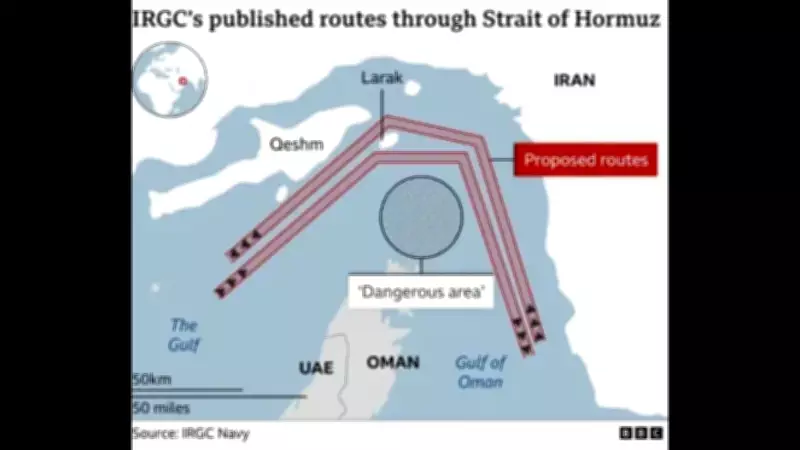
In April 2026, the United States is poised to implement a selective naval blockade targeting Iranian maritime traffic in the Strait of Hormuz, marking a significant escalation in maritime coercion strategy. Unlike a total closure, this limited blockade focuses on economic strangulation, aiming to interdict vessels linked to Iran while allowing neutral shipping to continue. This approach reflects a shift from traditional kinetic warfare to a hybrid legal-economic enforcement regime. The Strait's narrow geography, approximately 30 kilometers at its tightest navigable point, creates a compressed battlespace where all actors operate within mutual missile, drone, and surveillance ranges, fundamentally shaping operational dynamics.
Operational Design: Layered US Tactical Plan
The US tactical plan for enforcing the blockade relies on a layered maritime interdiction architecture integrating surveillance, interception, escort, and strike capabilities. The outermost layer consists of a surveillance and identification zone extending into the Gulf of Oman, where maritime patrol aircraft like the P-8 Poseidon, supported by unmanned aerial systems and satellite tracking, establish a comprehensive recognized maritime picture. This enables early identification of vessels suspected of trading with Iran, providing reaction time for interception further west.
Moving inward, the interception and boarding layer is positioned along the approaches to the Strait. US Navy destroyers, littoral combat ships, and Coast Guard boarding teams conduct visit, board, search, and seizure operations, emphasizing coercive compliance over immediate destruction to manage legal considerations and escalation control. Vessels violating the blockade are diverted, detained, or escorted away from Iranian ports, forming the operational core of enforcement.

Within the Strait itself, the US revives a convoy escort model reminiscent of the Cold War Tanker War. Naval surface combatants equipped with Aegis combat systems provide layered air and missile defense for escorted commercial shipping, contending with persistent threats from Iranian drones, anti-ship missiles, and fast attack craft. The confined geography increases vulnerability, as escort vessels cannot maneuver freely and remain within range of Iranian shore-based systems.
Beyond the immediate maritime space, a deeper strike and suppression layer is essential to sustain the blockade. Carrier strike groups, supported by submarines and long-range bombers from bases like Diego Garcia, target Iranian coastal missile batteries, drone launch sites, naval infrastructure, and mining capabilities. This transforms the blockade into a joint, multi-domain campaign extending deep into Iranian territory, as securing maritime transit requires degrading land-based threats.
Mine Warfare and Legal Dimensions
A critical component is mine countermeasure operations, given Iran's historical reliance on naval mines as a cost-effective asymmetric weapon. The US deploys specialized mine countermeasure vessels, helicopters, and unmanned underwater systems to detect and neutralize mines, though limited capacity for sustained operations poses a structural vulnerability in prolonged scenarios.
The legal dimension is equally important, with the US framing the operation within international law by issuing formal notices to mariners and leveraging the global insurance and shipping ecosystem. This "lawfare" component amplifies military action through financial and legal pressures, as shipping companies may avoid Iranian routes due to prohibitively expensive or unavailable insurance, creating an "insurance blockade."

Force Levels and Deployment Requirements
A credible blockade requires substantial and sustained deployment, including one to two carrier strike groups for air dominance and strike capability, supplemented by amphibious ready groups for crisis response. A surface fleet of 15 to 25 combatant vessels maintains continuous presence across operational layers, while several attack submarines provide stealth and strike options. Over a hundred aircraft sustain surveillance, interception, and strike operations, with mine warfare units being indispensable. The absence of robust coalition participation strains US capabilities and reduces operational depth and political legitimacy.
Operational Constraints in the Hormuz Battlespace
Operational constraints are severe due to geography and threat environment. The Strait's narrowness forces predictable shipping patterns, making vessels easier to target, while Iran's proximity ensures persistent targeting capability. High commercial traffic density complicates identification and engagement, increasing miscalculation risk. Iran does not need naval superiority; generating sustained uncertainty through limited attacks can disrupt global shipping flows by creating a perception of high risk.
Iranian Counterstrategy: Asymmetric and Calibrated Response
Iran's likely response is asymmetric, calibrated, and multi-layered. The Islamic Revolutionary Guard Corps Navy employs swarm tactics using fast attack craft to harass and overwhelm larger US vessels, focusing on speed and unpredictability. Naval mining targets approach corridors to maximize disruption, while Iran leverages anti-ship missiles, ballistic systems, and loitering munitions for sporadic but persistent attacks to sustain psychological pressure.
Iran's escalation ladder remains ambiguous, starting with harassment and warning shots, escalating to selective strikes on commercial shipping, and potentially expanding to coordinated missile and drone attacks with mining. At the extreme, direct engagements with US naval forces could occur, though Tehran likely avoids full-scale war. Parallel actions include activating regional proxies in the Red Sea, Iraq, and Lebanon to stretch US resources and complicate escalation management.
US Riposte Options and Escalation Management
The US response depends on strategic objectives and political constraints. A maximalist approach aims for maritime dominance through aggressive destruction of Iranian assets, risking broader regional conflict. A restrained strategy focuses on sustaining economic pressure while avoiding deep strikes, accepting ongoing disruption. A third option involves targeted strikes against high-value infrastructure to compel compliance quickly, though this also risks escalation.
Historical Precedents and Lessons Learned
Historical precedents offer insights: during the Iran-Iraq Tanker War, US convoy escorts under Operation Earnest Will maintained shipping but failed to eliminate threats. The Cuban Missile Crisis showed how a selective "quarantine" achieved political goals without full military enforcement, emphasizing legal framing. Mining operations in past conflicts highlighted the disproportionate impact of low-cost weapons, while recent Red Sea disruptions reinforce that perception often outweighs attrition in maritime warfare.
Metrics of Success: Economic, Operational, Strategic
Success is measured across three dimensions: economically reducing Iranian oil exports and revenue, operationally maintaining sufficient maritime traffic to prevent global disruption, and strategically compelling Iranian policy change without triggering wider war. Achieving all three is challenging, as measures maximizing economic pressure often increase escalation risk.
Sustainability and Strategic Assessment
A fundamental paradox emerges in sustainability: the US has overwhelming naval and technological superiority to dominate the battlespace, but the Strait's unique characteristics and Iran's asymmetric capabilities mean dominance does not equate to control. Iran's ability to impose risk allows continuous contestation of blockade effectiveness.
Conclusion: Control vs Risk in Modern Maritime Warfare
The contest in the Strait of Hormuz is defined not by classical sea control, but by risk and perception management. The US can enforce a blockade and degrade Iranian capabilities, but cannot eliminate vulnerabilities in a confined, contested environment. Iran only needs to sustain a perception of insecurity to achieve strategic effects, making the psychological battlespace as decisive as the physical one in determining blockade outcomes.
About the Author
Major General Dr Rajan Kochhar, VSM (Retd) is a senior Indian Army veteran with nearly 37 years of command and strategic logistics experience, including roles in Jammu & Kashmir and the North-East. He is a strategic and defence analyst, author, academic, logistics and defence management expert, and TEDx speaker, recognized with the VSM and multiple national and global honours.