US Delegation Led By JD Vance Exits Pakistan After Failed Iran Talks
In a significant diplomatic development, the United States delegation led by JD Vance has departed from Pakistan following a series of high-level discussions with Iranian officials that concluded without reaching any agreement. The talks, which extended over many hours in Islamabad, were centered on crucial diplomatic and security concerns between the two nations but ultimately failed to produce the anticipated breakthrough.
Breakdown in Negotiations Over Terms
According to official sources familiar with the proceedings, the negotiations reached an impasse primarily because Iran did not accept the proposed terms put forward by the United States. This rejection led to a complete breakdown in the diplomatic dialogue, marking another chapter in the ongoing tensions between Washington and Tehran. The discussions were reportedly intense and covered a wide range of issues, yet no common ground could be established on the key points of contention.
Delegation's Planned Departure From Islamabad
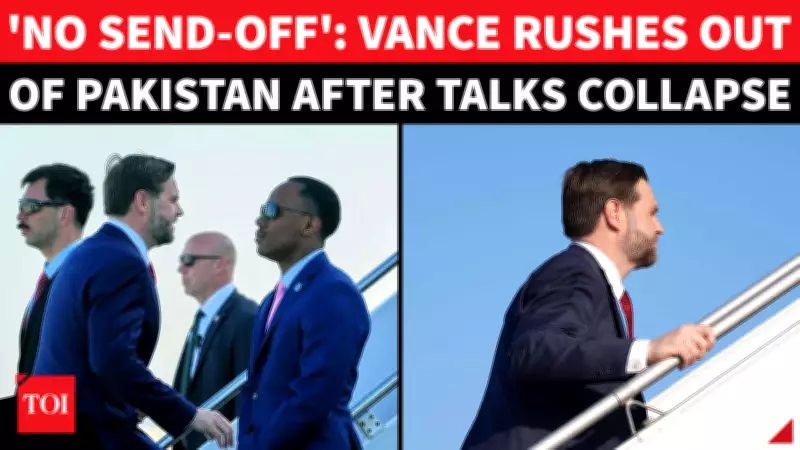
Following the conclusion of the unsuccessful talks, the US delegation proceeded with their scheduled departure from Islamabad. The exit was carried out as planned, with the motorcade transporting JD Vance and other delegation members rushing out of the Pakistani capital. This departure underscores the immediate end to this round of diplomatic engagement, leaving the future of US-Iran relations uncertain and potentially more strained.

Context and Broader Implications
The failed talks in Pakistan occur against a backdrop of heightened geopolitical tensions in the Middle East and beyond. Recent related developments include:
- Speculation about potential limited strikes on Iran by the US
- Increased military activities involving Hezbollah and Israel
- Rising oil prices amid the diplomatic uncertainty
- Public statements from US leadership rejecting further negotiations with Iran
- Iran's warnings regarding the Strait of Hormuz and its strategic importance
These elements collectively highlight the complex and volatile nature of international diplomacy in this region, where security concerns and political posturing often overshadow dialogue efforts.
Analysis of the Diplomatic Stalemate
The inability to secure an agreement during these talks suggests several underlying challenges in US-Iran relations. First, the fundamental disagreements over nuclear policies, regional influence, and security arrangements appear to remain deeply entrenched. Second, the political climate in both countries, with leadership changes and domestic pressures, may be limiting the flexibility needed for compromise. Third, the involvement of third-party nations like Pakistan as a venue indicates the international community's interest in facilitating dialogue, yet even this neutral ground proved insufficient to bridge the gaps.
The departure of the US delegation empty-handed from Pakistan not only marks a setback for bilateral relations but also raises questions about the next steps in managing this critical geopolitical relationship. Observers note that without diplomatic progress, the risk of escalation in conflicts or economic disruptions, such as those affecting global oil markets, could increase significantly in the coming months.