Kintoor Village in Uttar Pradesh Grieves for Iran's Slain Supreme Leader Ali Khamenei
In the quiet village of Kintoor, located in Barabanki district of Uttar Pradesh, a profound sense of mourning has enveloped the community following the assassination of Iran's Supreme Leader Ali Khamenei. This grief is deeply personal, rooted in a historic connection that dates back nearly two centuries to a pivotal migration that would eventually shape Iran's sociopolitical landscape.
The Historic Journey of Sayed Ahmad Musavi Hindi
The story begins in 1834 when a respected Shia cleric named Sayed Ahmad Musavi Hindi departed from Kintoor on a pilgrimage to Iran. Accompanied by the then Nawab of Awadh, Musavi settled in Iran, where he married his mentor's daughter and raised a family. His lineage would become instrumental in Iran's modern history, first through his great-grandson Ruhollah Khomeini, who led the 1979 Islamic Revolution, and later through Khomeini's successor, Ali Khamenei.
Historical accounts suggest that Musavi intended to return to Kintoor, a village that later became a flashpoint during the 1857 Sepoy Mutiny. However, British colonial authorities blocked his return due to his anti-British writings, which fueled dissent in India. Musavi, who was born in Kintoor but received his Islamic education in Najaf, Iraq—a center of Shia scholarship—adopted the name "Khomeini" from the Iranian city of Khomeyn, where he made his home.

Village Mourns as if a Family Member Has Passed
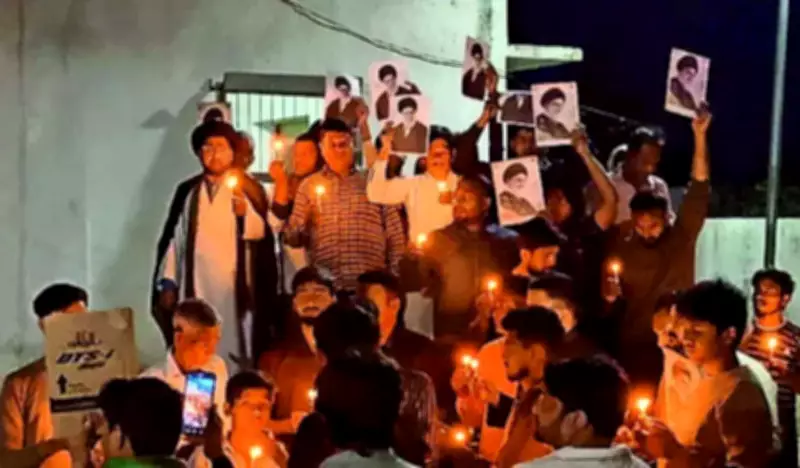
Almost 4,000 kilometers from Tehran, Kintoor has responded to Khamenei's killing with intense emotion. Within hours of the news breaking, both Shia and Sunni Muslim residents took to the streets, holding portraits of Khamenei and chanting slogans against Israel and the United States. Shops closed, majlis (assemblies) were organized, and processions of mourners dressed in black continued late into the night.
Two days later, the atmosphere remains charged with anger and sorrow. One protester expressed, "Khamenei opted for bravery instead of surrender. His death is worthy of remembrance." This sentiment underscores the village's enduring bond with the Iranian leadership, despite the physical and temporal distance.
Preserving Ancestral Ties and Memories
Adil Kazmi, a 33-year-old descendant of Mufti Mohammad Quli Musavi—a cousin of the Ayatollah patriarch—shared insights into the family's history. He noted that Ahmad Musavi retained the suffix "Hindi" in his surname as a marker of his Indian roots, even as he embraced life in Iran. Musavi fathered three daughters and a son named Syed Mostafa, who would become Khomeini's father. Ahmad Musavi passed away in 1869 and was buried in Karbala.
Syed Nihal Kazmi, Adil's 67-year-old father, recalls a research team from Iran visiting Barabanki 25 years ago to study Khomeini's ancestry and connect with the local community. Historian Ravi Bhatt adds context, tracing the migration further back: "It is believed that Khomeini's ancestors had come to India from Nishapur in northeast Iran and later called their relatives to settle in Barabanki, which had become a major Islamic center."
Legacy Lives on in Kintoor's Homes and Hearts
Inside homes in Kintoor, portraits of Khomeini still adorn the walls, serving as tangible reminders of this cross-continental lineage. Although the family's direct connection with the village was severed two centuries ago, the emotional and historical ties remain strong. This Barabanki pocket refuses to let go of its shared heritage, mourning Khamenei not just as a distant political figure, but as part of their extended family.
The events in Kintoor highlight how personal histories can transcend borders, linking a small Indian village to global geopolitical shifts. As the world watches the unfolding tensions in the Middle East, including recent incidents like Israel's attacks and Iran's missile strikes, Kintoor stands as a testament to the enduring human connections that shape our understanding of conflict and legacy.