

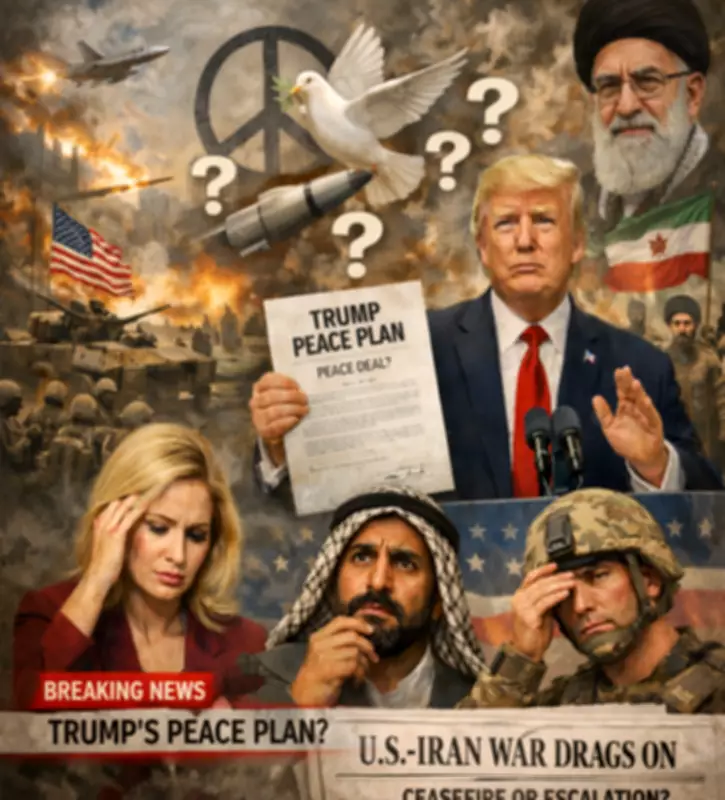
Trump's Dual Strategy: Peace Talks and Military Buildup with Iran
In a striking development that underscores the volatile dynamics of Middle Eastern diplomacy, former President Donald Trump has publicly revealed that the United States is actively engaged in discussions with Iran aimed at terminating the ongoing conflict in the region. This announcement comes at a time when the Trump administration is simultaneously escalating military pressure, including threats of additional attacks and the deployment of more Pentagon troops to the area.
Iran's Public Rejection and Private Openness
Iran has responded to Trump's proposal with a firm public dismissal, utilizing its state-controlled media to assert that any cessation of hostilities must occur strictly on Tehran's own terms. The Iranian government has emphasized its sovereignty and strategic interests, rejecting what it perceives as external impositions from the United States.
However, behind the scenes, a different narrative is emerging. Iranian officials have privately indicated a willingness to engage in negotiations, suggesting a potential flexibility that contrasts sharply with their public stance. This dual approach highlights the complex and often contradictory nature of international diplomacy, where public posturing and private maneuvering can coexist.

The Context of US Military Actions
The Trump administration's peace initiative is unfolding against a backdrop of significant military activity. The Pentagon has been actively reinforcing its presence in the Middle East, dispatching additional troops and resources to the region. This military buildup is part of a broader strategy to exert pressure on Iran, combining diplomatic overtures with the threat of force.
Trump himself has not shied away from making explicit threats of further attacks, creating a tense environment where the prospects for peace are intertwined with the realities of military escalation. This approach reflects a calculated gamble, aiming to leverage both dialogue and deterrence to achieve a favorable outcome in the conflict.
Implications for Middle East Stability
The interplay between Trump's peace proposal and Iran's mixed signals has profound implications for the stability of the Middle East. If negotiations progress, they could pave the way for a de-escalation of tensions and a potential resolution to the war. However, the concurrent military buildup introduces a high level of uncertainty, raising concerns about the potential for miscalculation or escalation.
Analysts are closely monitoring the situation, noting that the success of this peace gamble hinges on the ability of both sides to navigate the delicate balance between diplomacy and military posturing. The outcome could significantly influence regional alliances, security dynamics, and the broader geopolitical landscape.
As the situation continues to evolve, the world watches with bated breath, hoping that the path to peace can overcome the challenges posed by conflicting interests and strategic maneuvers. The stakes are high, and the decisions made in the coming weeks and months will likely shape the future of the Middle East for years to come.






