Trump's Second Presidency Tests US-India Partnership
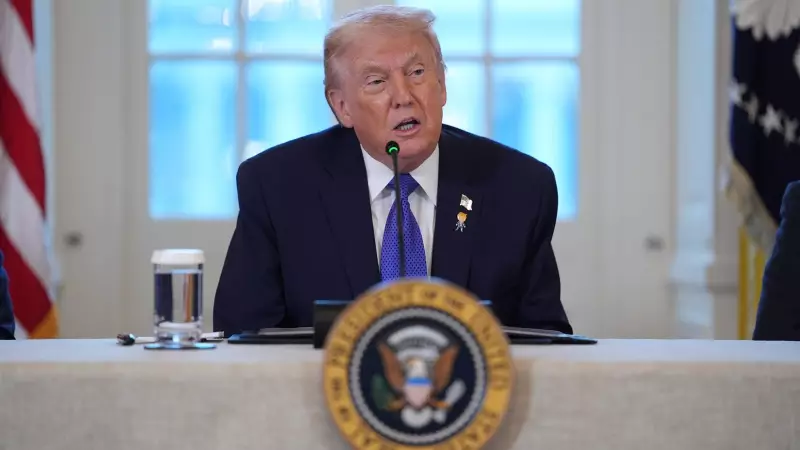
In November 2024, after Donald Trump won re-election as US President, India's External Affairs Minister S Jaishankar made a confident statement. He declared that while many countries felt nervous about the United States, India did not share that anxiety. This seemed reasonable at the time. US-India relations had remained strong for decades, even during Trump's first term when Washington's ties with other allies weakened. Prime Minister Narendra Modi and Trump enjoyed a warm personal rapport. Many expected tensions from the Biden era to fade away, especially since Trump held more moderate views on Russia and showed less interest in pressing India on human rights and democracy issues.
Initial Optimism Gives Way to Rapid Deterioration
The partnership began on a positive note. In February 2025, Modi became one of the first foreign leaders to visit the Trump White House after the election. The two leaders announced a new phase of cooperation. However, the situation quickly turned sour. Trump has long been frustrated by India's tariffs and the significant trade imbalance favoring New Delhi. His aggressive negotiation style demands that counterparts concede on nearly all points. India did make substantial concessions. It lowered and eliminated various tariffs and agreed to take back undocumented workers. Yet these moves failed to satisfy the Trump administration.
Failed trade talks and new US tariffs dealt the first major blows to bilateral relations. India's tariff burden doubled from 25 percent to 50 percent, creating immediate economic strain.

Russia Pressure and Pakistan Relations Add Complexity
India also found itself entangled in Trump's Russia strategy. While Trump generally avoids a hard line against Moscow, he desperately wants Vladimir Putin's support for his Ukraine peace proposal. To pressure Putin, Trump targeted Russia's commercial partners, urging them to reduce engagement with Moscow. India became an easy focus for this pressure. Although China imports more Russian oil than India, New Delhi dramatically increased its purchases after the Ukraine invasion. India has actually boosted American oil imports in recent years and reduced Russian purchases late last year. But these adjustments proved insufficient for the Trump administration.
Meanwhile, Pakistan re-emerged as a point of tension. India has traditionally accepted Washington's ongoing relationship with Pakistan's military leadership. However, the rapid resurgence of US-Pakistan ties under Trump became unavoidable. The administration shifted from minimal engagement to hosting Pakistan's General Asim Munir at the White House multiple times. This swift change occurred after Operation Sindoor, adding to the strain.
Diplomatic Differences and Harsh Rhetoric
Another trigger for tensions was India's refusal to adopt Trump's preferred diplomatic style. New Delhi's unwillingness to offer excessive praise, flattery, or make unlimited concessions hurt its standing. In the Trump era, India's calm and conventional diplomatic approach became a liability rather than an asset.
Then came the harsh rhetoric. The White House issued withering criticism about India's "dead economy" and accused it of funding Russia's "war machine." The MAGA base amplified this with ugly anti-India messaging. While problematic policies formed the core narrative of US-India relations last year, the nasty American rhetoric provided a constant, screechy backdrop.
Strategic Challenges and Uncertain Future
New Delhi might argue that its strategic autonomy provides flexibility to weather this storm. In reality, India faces significant challenges. It encounters major obstacles accessing a critical export market. Workarounds like an impending free trade agreement with the European Union offer some relief, but they cannot fully replace the United States. Furthermore, future American assistance regarding China remains uncertain. This is no small matter. Previously, Washington shared intelligence to help deter Chinese border provocations and partnered with India to counter Chinese influence in non-military domains like technology.
More broadly, amid global turmoil and unpredictability, a close partnership with the US had been a rare and reassuring constant for New Delhi. That certainty has now vanished.

Pathways to Recovery
Sergio Gor, Washington's new envoy to Delhi, has signaled a desire to repair ties. His deep influence in Trump's White House makes this significant. However, he will need to work diligently to rebuild the trust that the US has squandered in India. One key indicator to watch is the power dynamics within Washington. If officials beyond Trump and his top aides gain more policy space and start driving the relationship with India, the partnership could recover. Outside the White House, especially among mid-level officials and bureaucrats, strong support for close ties with India persists.
Ultimately, everything depends on Trump himself. Stabilizing the relationship will likely require a presidential visit to India, perhaps for an overdue Quad leaders' summit. He might be more inclined to go if he has something substantial to announce, such as a trade deal. For now, one thing remains clear. Many countries continue to feel nervous about the United States. India, presumably, has now joined their ranks.