Trump Confirms Three-Person Shortlist for Iran's Leadership Following Khamenei's Death
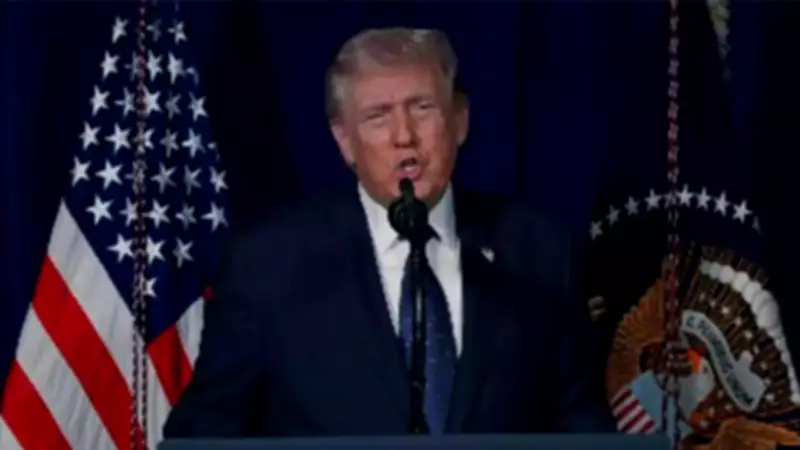
Former United States President Donald Trump has publicly announced that he and his administration possess a confidential shortlist comprising three potential leaders for Iran. This revelation comes in the aftermath of the death of Iran's Supreme Leader, Ayatollah Ali Khamenei, who was killed in a significant joint military airstrike conducted by the United States and Israel. The attack marks a major escalation in the ongoing regional conflict.
"I won't be revealing them now. Let's get the job done first," Trump stated in an exclusive interview with the New York Times, emphasizing a strategic approach before disclosing specific names.
Ongoing Military Campaign and Regional Strikes
The military offensive has intensified following Khamenei's demise, with both American and Israeli forces continuing to target Iranian military installations and assets. In retaliation, Iran has launched numerous missile and drone attacks directed at Israel, United States military bases located throughout the Gulf region, and various other strategic targets across the Middle East.

Trump further elaborated that United States military operations within Iran could potentially extend for a duration of "four to five weeks" if the situation necessitates prolonged engagement. He also referenced a potential transition model reminiscent of the United States' strategy in Venezuela, where the top leadership was removed while many state institutions and structures were deliberately preserved.
Interim Leadership and Ayatollah Alireza Arafi's Appointment
In response to the leadership vacuum, Tehran has officially appointed Ayatollah Alireza Arafi as the interim Supreme Leader of Iran. Arafi, a senior cleric born in 1959 in Meybod within Yazd province, originates from a prominent clerical family. He is a long-standing insider within Iran's complex religious and political hierarchy, having studied in Qom, Iran's primary seminary city, and achieved the status of a mujtahid, granting him authority to issue independent Islamic legal rulings.
His career advanced significantly under the patronage of the late Ayatollah Ali Khamenei, who entrusted him with crucial roles including leading Friday prayers in both Meybod and Qom. Arafi also previously served as the head of Al-Mustafa International University and, in 2019, was appointed as a member of the influential Guardian Council, which oversees legislation and electoral candidate vetting.
Potential Candidates for Permanent Supreme Leader
According to Iran's constitutional framework, the permanent Supreme Leader must be selected by the Assembly of Experts, an 88-member clerical body elected every eight years. This assembly is also known for its rigorous disqualification of candidates during Iran's elections. The potential contenders for this pivotal role include:

- Mojtaba Khamenei, 56: The second-eldest son of the late Ayatollah Ali Khamenei, viewed by many insiders as a leading successor candidate. He is aligned with his father's hardline policies and has been flagged by the US Treasury Department over allegations involving a $1.5 billion transfer out of Iran.
- Hassan Khomeini, 53: Grandson of Ruhollah Khomeini, the founder of the Islamic Republic. He has recently gained traction as a serious contender and is perceived by some observers as a more conciliatory figure compared to other hardliners, both domestically and in international relations.
- External Figures: Maryam Rajavi, president-elect of the Paris-based National Council of Resistance of Iran, advocates for the regime's overthrow and proposes a transitional government. Reza Pahlavi, son of Iran's last monarch, supports democratic transition and has encouraged public protests.
Openness to Dialogue and Future Prospects
Despite the ongoing hostilities, Trump has expressed a willingness to engage in diplomatic discussions with Iran's new leadership. In an interview with The Atlantic, he confirmed that Iranian leaders have indicated a desire for dialogue, and he has agreed to participate. "They want to talk, and I have agreed to talk, so I will be talking to them," Trump affirmed, highlighting a potential avenue for de-escalation amidst the conflict.
The situation remains highly volatile as Iran navigates this critical leadership transition under the shadow of sustained military attacks and internal political maneuvering. The international community watches closely as developments unfold, impacting regional stability and global geopolitical dynamics.