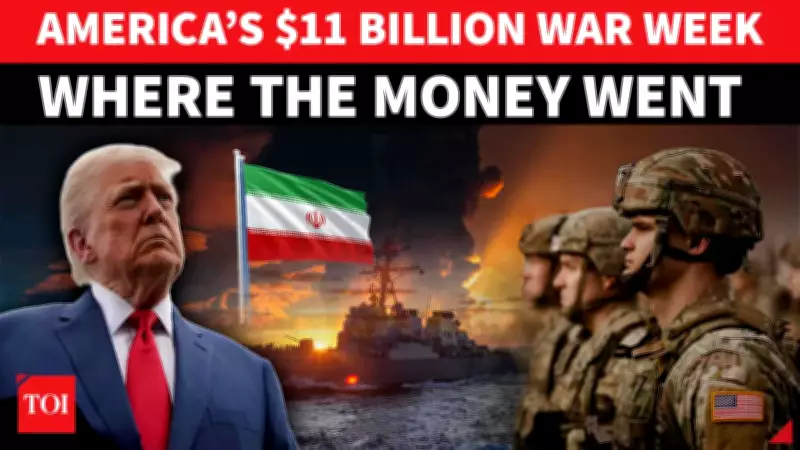
Trump's $11 Billion Iran Campaign: Taxpayer Money Flows With No Victory In Sight
In a staggering financial revelation, the United States military campaign against Iran has already consumed over $11.3 billion in just the first week of operations. This massive expenditure is rapidly escalating, with no clear path to victory emerging, placing an immense burden on American taxpayers under the Trump administration's strategy.
Where The Billions Are Going
The breakdown of costs paints a picture of high-tech warfare with exorbitant price tags. Precision-guided bombs, each costing hundreds of thousands of dollars, are being deployed extensively. Simultaneously, million-dollar missile interceptors are being fired to counter cheap Iranian drones, creating a lopsided economic equation that favors Tehran's asymmetric tactics.
This financial drain is compounded by a looming $50 billion funding request that the administration is preparing to submit to Congress. If approved, this would further inflate the total cost, raising questions about the sustainability and strategic wisdom of the campaign.

Human And Regional Toll
Beyond the monetary figures, the conflict has exacted a severe human cost. More than 1,300 people have been killed across the region, with communities shattered by violence. Additionally, over 800,000 individuals have been displaced, fleeing their homes amid the escalating hostilities, which shows no signs of abating.
The regional instability is deepening, with reports of Iranian forces revealing hidden missile cities and lethal naval drones, while threats against U.S. and Israeli interests continue to mount. Recent incidents, such as a deadly explosion at a Tehran rally and the loss of a U.S. plane near Iran, underscore the volatile and dangerous environment.
Strategic Implications And Criticisms
Critics argue that this campaign represents a significant financial bleed for American taxpayers without delivering tangible victories. The use of expensive interceptors against low-cost drones highlights a tactical challenge, where Iran's cheaper methods strain U.S. resources disproportionately.
Internationally, the conflict has drawn reactions from global powers. Russia and China have teamed up at the United Nations to defend Iran, questioning claims about Iranian nuclear capabilities and challenging U.S.-Israel narratives. Meanwhile, fears grow over potential Russian involvement in Iran's Hormuz blockade, adding another layer of complexity to the geopolitical landscape.
In Israel, defense systems are reportedly faltering under rocket barrages from Hezbollah, an Iranian ally, indicating that the conflict's ripple effects are spreading wider, threatening broader regional security.
Looking Ahead
As costs soar and casualties rise, the Trump administration faces mounting pressure to justify this multi-billion-dollar endeavor. With no decisive victory in sight and the bill still climbing, American taxpayers are left funding a costly military campaign that risks becoming a protracted quagmire, draining national resources while failing to achieve its stated objectives.