

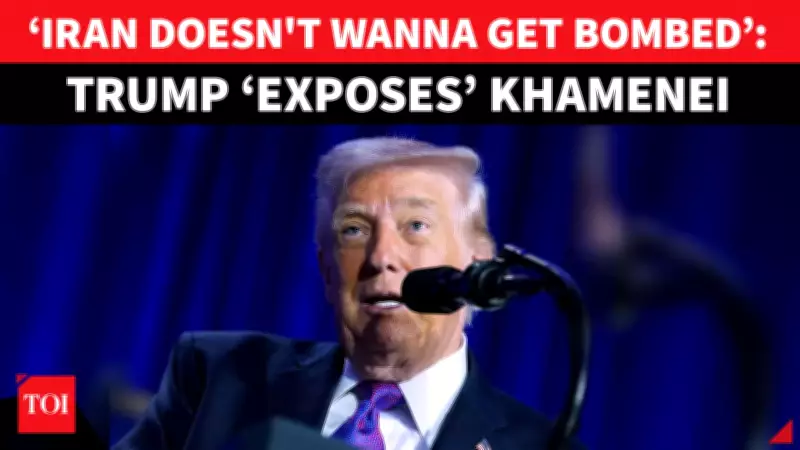
Trump Issues Stark Warning on Iran, Mocks Supreme Leader Amid Escalating Tensions
In a dramatic address that has sent shockwaves through international diplomatic circles, US President Donald Trump delivered a provocative message regarding Iran during the National Prayer Breakfast. The President's comments come at a critical juncture, with indirect negotiations between Washington and Tehran scheduled to commence in Muscat, Oman, and a significant US naval buildup adding to the regional pressure.
A Message of Strength and Negotiation
President Trump asserted that Iran is actively "negotiating" with the United States, explicitly stating that Tehran "doesn't want us to hit them." This blunt characterization of the diplomatic process underscores the administration's hardline stance, framing the talks as a direct result of American military readiness rather than mutual diplomatic goodwill.
The timing of these remarks is particularly significant. The looming naval deployments in the region serve as a tangible reminder of Washington's capability to enforce its demands, creating a backdrop of imminent threat that Trump suggests is driving Iran to the negotiating table. This approach aligns with the President's long-standing strategy of applying maximum pressure to compel concessions from adversarial nations.

Mocking Khamenei and the Nuclear Standoff
In a characteristically confrontational move, President Trump did not shy away from mocking Iran's Supreme Leader, Ayatollah Ali Khamenei. This personal ridicule, embedded within a formal diplomatic update, represents a deliberate escalation in rhetoric, potentially complicating the already fragile prospects for successful dialogue.
The core issue remains Iran's nuclear program. The upcoming talks in Muscat are intended to find a pathway to de-escalation, but Trump's latest statements inject a new layer of uncertainty. By publicly questioning Iran's intentions and mocking its leadership, the President risks hardening Tehran's position, making compromise more politically difficult for the Iranian regime.
Global Repercussions and Regional Stability
The international community is watching these developments with acute concern. A conflict between the United States and Iran would have devastating consequences for global energy markets, regional stability in the Middle East, and international security architecture. Trump's framing of war as "inevitable" unless Iran capitulates marks a dangerous rhetorical shift, moving from deterrence to what many analysts perceive as a prelude to confrontation.
As preparations for the Muscat talks continue, the world awaits to see whether this public posturing is a negotiation tactic or a genuine reflection of US policy. The coming weeks will be crucial in determining whether diplomacy can prevail over the drumbeat of war that now echoes from the highest levels of the American government.






