

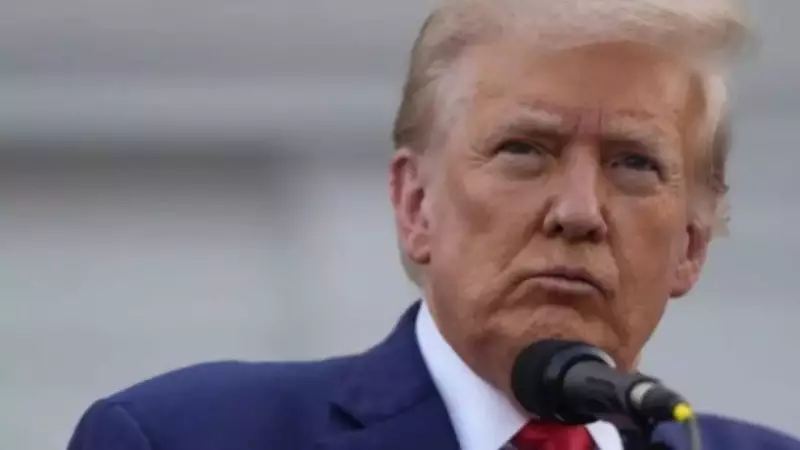
Former US President Donald Trump issued a stark warning to Iraq on Tuesday, declaring that the United States would terminate all support for the nation if former Prime Minister Nouri al-Maliki returns to power. In a post on his Truth Social platform, Trump emphasized that Iraq would be making a "very bad choice" by reinstating Maliki, whose previous tenure he blamed for plunging the country into poverty and chaos.
Trump's Strong Stance on Iraqi Politics
Trump articulated that due to Maliki's policies and ideological stance, the US would halt its assistance to Iraq should he be elected prime minister again. He further asserted that without American backing, Iraq would have little prospect of achieving success, prosperity, or freedom. This warning underscores the significant leverage the US holds over Iraq, particularly through economic channels.
Historical Context and US Influence
Maliki stepped down in 2014 under pressure from the United States, which attributed his sectarian policies to the rise of the Islamic State group. The US maintains considerable control over Iraq's economy, as most of the country's oil export revenues are held at the Federal Reserve Bank in New York under an arrangement established after the 2003 US invasion. Oil sales constitute approximately 90 percent of Iraq's government income, making this financial dependency a critical factor in bilateral relations.

Recent Diplomatic Moves and Political Backing
Trump's comments follow recent diplomatic efforts by the US, including a phone call from Secretary of State Marco Rubio to current Prime Minister Mohammed Shia al-Sudani, where similar concerns were raised. Additionally, political sources indicate that Washington has sent a letter to Iraqi leaders expressing its negative view of Maliki's potential return.
Shiite Political Dynamics in Iraq
Maliki has been nominated for the prime minister position by the largest Shiite political bloc in Iraq. On Saturday, the Coordination Framework, a coalition of Shiite parties that holds a majority in parliament, endorsed his nomination. By tradition, Iraq's prime minister has been a Shiite Muslim since the fall of Saddam Hussein, reflecting the country's complex sectarian landscape.
This development highlights the ongoing tensions in US-Iraq relations and the broader geopolitical implications of leadership changes in the Middle East. As Iraq navigates its political future, the stance of key international players like the United States will play a pivotal role in shaping its trajectory.






