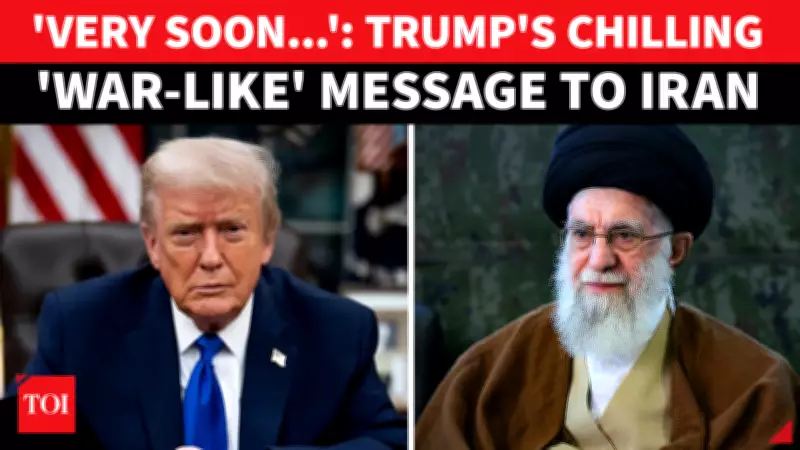
Trump Announces Second Aircraft Carrier Deployment to Middle East Amid Iran Nuclear Talks
In a significant military development, former U.S. President Donald Trump has confirmed plans to deploy a second American aircraft carrier group to the Middle East region. The announcement comes as diplomatic negotiations with Iran over its nuclear program continue, with Trump stating the carrier will depart "very soon" to strengthen American leverage during these critical talks.
Heightened Military Posture as Diplomacy Continues
Speaking to reporters as he departed the White House for Fort Bragg, Trump expressed cautious optimism about reaching a nuclear agreement with Iran but issued a stern warning about potential consequences if negotiations fail. "We're making progress, but we need to show we're serious," Trump stated, emphasizing that the carrier deployment signals American resolve while diplomatic channels remain open.
The decision to send additional naval power to the region represents a substantial escalation in military readiness, even as diplomatic efforts persist. This dual-track approach of combining military pressure with negotiation reflects the complex dynamics of U.S.-Iran relations, where tensions have periodically flared over nuclear ambitions and regional influence.

Iran Responds with Military Alert Status
In response to the announced deployment, Iranian military forces have reportedly gone on "alert mode," according to regional security analysts. This heightened state of readiness suggests Tehran views the additional American naval presence as a potential threat, despite Washington's characterization of the move as strengthening negotiation leverage rather than preparing for immediate conflict.
The deployment timing is particularly significant given ongoing nuclear negotiations that have seen periods of both progress and stalemate. By positioning additional military assets in the region, the U.S. administration appears to be creating what defense experts describe as "negotiation from strength" - demonstrating capability while maintaining dialogue.
Strategic Implications for Regional Stability
The decision to deploy a second carrier group carries multiple strategic implications:
- Enhanced deterrence capability against potential Iranian actions that might undermine nuclear negotiations
- Increased operational flexibility for U.S. forces in monitoring maritime channels and responding to regional developments
- A visible demonstration of American commitment to Middle East security architecture
- Potential escalation risks if Iranian forces interpret the deployment as preparation for offensive operations
Military analysts note that aircraft carrier deployments typically involve substantial support vessels and aircraft, creating a formidable naval presence capable of projecting power across vast distances. This particular deployment comes amid broader regional tensions that have seen periodic flare-ups between Iranian-backed forces and American interests.
Diplomatic Context and Future Prospects
Trump's announcement carefully balanced optimism about nuclear negotiations with clear warnings about potential failure. "I believe we can reach a good deal," he told reporters, "but if we don't, there will be serious consequences." This formulation maintains pressure on Iranian negotiators while keeping diplomatic pathways open.
The coming weeks will reveal whether this military reinforcement facilitates diplomatic progress or instead hardens positions on both sides. Regional observers are closely monitoring whether the carrier deployment achieves its stated purpose of strengthening negotiation leverage or instead provokes counter-mobilization that could undermine the very diplomatic process it's meant to support.
As the situation develops, the international community watches carefully, aware that Middle East stability often hinges on the delicate balance between military preparedness and diplomatic engagement - a balance now being tested by this significant naval deployment announcement.