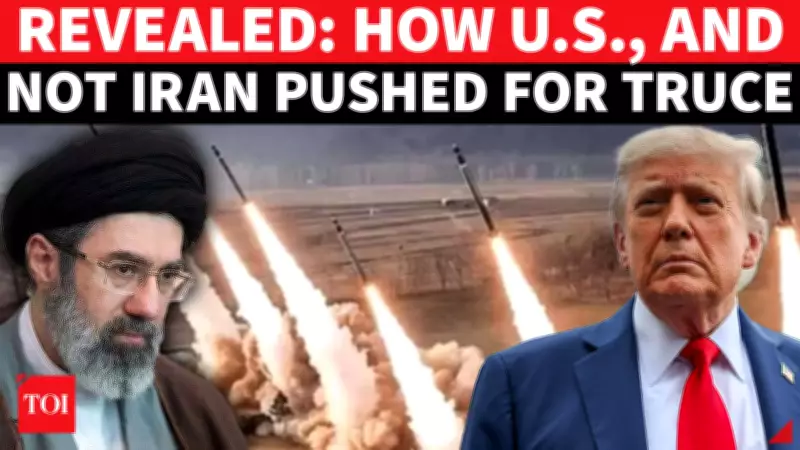
Behind the Scenes: How Trump Leveraged Pakistan for Iran Truce
A recent Financial Times investigation has uncovered the clandestine diplomatic maneuvers that led to the temporary ceasefire between the United States and Iran. According to the report, the White House under President Trump actively pressured Pakistan to act as a mediator, tasking Islamabad with presenting Washington's proposal directly to Tehran.
Pakistan's Critical Mediation Role
As tensions escalated and a Trump-imposed deadline approached, Pakistani officials embarked on frantic back-channel diplomacy. Prime Minister Shehbaz Sharif and Army Chief General Asim Munir personally shuttled messages between the two adversarial capitals, facilitating communication that had otherwise broken down.
This high-stakes mediation effort proved crucial in securing the two-week pause in hostilities and the subsequent reopening of the strategically vital Strait of Hormuz, a global oil transit chokepoint that had been threatened by the conflict.

The White House Pressure Campaign
The Financial Times report details how Washington explicitly leaned on Islamabad to "sell" the ceasefire proposal to Iranian leadership. This diplomatic push came amid broader regional instability, including related conflicts involving Israel and Lebanon that were referenced in contemporaneous news coverage.
While the temporary truce represents a diplomatic achievement, the underlying tensions remain unresolved, with both sides maintaining their strategic positions in the volatile Middle East region.