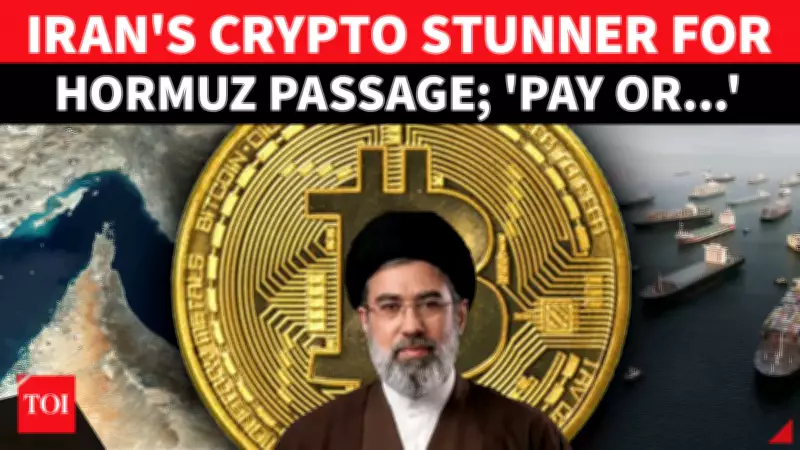
Iran's $1 Cryptocurrency Toll on Strait of Hormuz Sparks Global Oil Crisis Fears
In a bold move that threatens to disrupt global energy markets, Iran has announced plans to impose a $1 per barrel toll on oil tankers passing through the strategically vital Strait of Hormuz. This narrow maritime passage, through which nearly 20% of the world's oil flows daily, is now at the center of a high-stakes geopolitical standoff. The Iranian government, according to a recent Financial Times report, is demanding that all payments for this new transit fee be made exclusively in cryptocurrency, a decision that adds a digital twist to an already volatile situation.
Ceasefire Tensions and Economic Implications
This controversial toll comes despite a fragile two-week ceasefire agreement between Iran and the United States, under which Iran had temporarily reopened the Strait to international shipping. The ceasefire, aimed at de-escalating regional tensions, now faces a severe test as Iran's unilateral imposition of fees could violate the spirit, if not the letter, of the truce. US officials have issued stern warnings, urging Iran not to test the ceasefire with actions that might provoke further conflict or economic retaliation.
The economic ramifications are profound. With hundreds of oil tankers—reportedly up to 300 ships—scrambling to navigate the new regulations, global oil prices are poised for potential volatility. Industry analysts predict that the $1 per barrel charge, while seemingly modest, could translate into billions of dollars annually, given the sheer volume of oil transiting the strait. Moreover, the requirement for cryptocurrency payments introduces logistical challenges and security concerns for shipping companies accustomed to traditional financial systems.

Strategic Control and Regional Power Plays
Iran's move is widely seen as an assertion of its strategic control over one of the world's most critical maritime chokepoints. By leveraging its geographical advantage, Tehran aims to bolster its economic standing amid ongoing international sanctions and regional conflicts. The Strait of Hormuz has long been a flashpoint in Middle Eastern geopolitics, and this latest development underscores Iran's willingness to use it as a bargaining chip in broader diplomatic negotiations.
Regional stability hangs in the balance, as neighboring countries and global powers monitor the situation closely. The United States, in particular, has emphasized that any disruption to free navigation in the strait could trigger a swift response, potentially jeopardizing the ceasefire and escalating into a broader confrontation. This toll imposition represents a calculated risk by Iran, testing the limits of international tolerance while seeking to capitalize on its strategic assets.
Cryptocurrency as a Tool in Geopolitics
The decision to demand cryptocurrency payments marks a significant innovation in how nations might leverage digital assets in geopolitical maneuvering. By bypassing traditional banking systems, Iran could potentially evade some financial sanctions and gain greater autonomy in its economic transactions. However, this approach also raises questions about the practicality and security of large-scale crypto payments in the volatile oil shipping industry.
As the global community watches, the unfolding scenario at the Strait of Hormuz serves as a stark reminder of the interconnectedness of energy security, digital finance, and international diplomacy. With the ceasefire on thin ice, the coming days will be crucial in determining whether this crypto toll becomes a new norm or a fleeting provocation in the complex tapestry of Middle Eastern politics.