Trump Voices Displeasure with Iran While Pursuing Nuclear Agreement
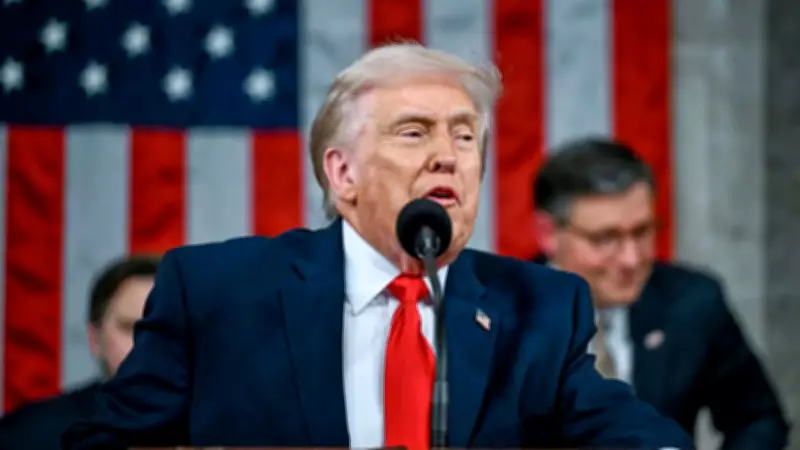
US President Donald Trump has publicly stated he is "not happy" with Iran, yet he remains committed to reaching a diplomatic agreement, even as Washington intensifies its military presence in the Middle East. In remarks to reporters, Trump indicated that further discussions with Iran are anticipated on Friday, emphasizing his unwavering demand: "Iran cannot have nuclear weapons."
Military Force Considered as Last Resort
When questioned about the potential use of military force against Iran, Trump conveyed a sense of reluctance but left the option open, remarking, "Don't want to, but sometimes you have to." This statement comes amid heightened tensions following recent nuclear negotiations in Geneva, mediated by Oman. Although some progress has been reported, no formal agreement has been announced.
Trump has consistently threatened military action if Iran refuses to accept a comprehensive deal to curb its nuclear program. Iran, however, maintains its right to enrich uranium for peaceful purposes and denies any pursuit of nuclear weapons.

Diplomatic Efforts Persist Alongside Military Buildup
Despite the stern rhetoric, diplomatic channels remain active. US Secretary of State Marco Rubio is scheduled to visit Israel on Monday and Tuesday to address regional priorities, including Iran, Lebanon, and the implementation of Trump's 20-Point Peace Plan for Gaza. This diplomatic move coincides with a significant US military build-up in the region, featuring the deployment of one aircraft carrier already in the Middle East and another en route, along with additional aircraft and warships.
Iran has issued warnings of retaliation against American forces in the region, including those stationed at US bases in allied Arab countries, in the event of an attack.
Embassy Departures and Travel Advisories Issued
In response to the escalating situation, the US Embassy in Jerusalem has authorized the voluntary departure of non-essential personnel and their families. US Ambassador Mike Huckabee urged staff wishing to leave to do so immediately, noting that outbound flights might not be available indefinitely. Other nations have taken similar precautions:
- Britain has temporarily withdrawn its embassy staff from Iran, operating remotely.
- Australia has directed dependents of its officials in Israel to depart.
- China and several European countries have advised citizens to avoid travel to Iran.
Nuclear Concerns and Stalled Inspections
A confidential report from the UN's nuclear watchdog, accessed by AP, reveals that Iran has not granted inspectors access to sensitive nuclear sites since they were heavily bombed during a 12-day conflict initiated by Israel last June. Consequently, the agency cannot verify Iran's claim that it halted uranium enrichment following US and Israeli strikes.
Iranian Foreign Minister Abbas Araghchi stated on Thursday that "what needs to happen has been clearly spelled out from our side," without providing details. Tehran has long sought sanctions relief in exchange for limits—but not a complete halt—to its nuclear activities.
Technical discussions are set to occur in Vienna next week, and US Vice President JD Vance is expected to meet with Oman's Foreign Minister Badr al-Busaidi in Washington, as Muscat continues its mediation efforts between the US and Iran.