Trump Declares Future Iran Agreement Will Outperform Previous Nuclear Deal
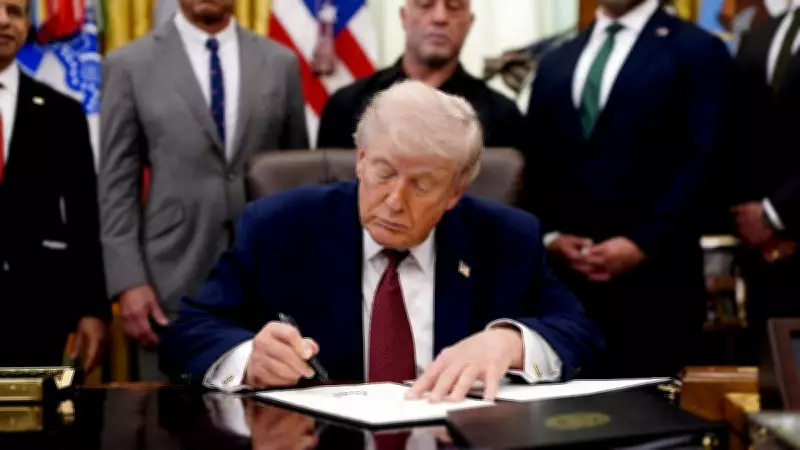
Former United States President Donald Trump has made a significant statement regarding diplomatic relations with Iran, asserting that any new deal negotiated with the Middle Eastern nation would be substantially better than the previous nuclear agreement. This declaration comes years after his administration's controversial decision to withdraw from the established pact.
Historical Context: The 2018 Withdrawal from JCPOA
During his first term in the White House, President Trump took the dramatic step of pulling the United States out of the Joint Comprehensive Plan of Action (JCPOA) in May 2018. This multinational agreement, originally brokered in 2015, involved Iran, the United States, and several world powers including China, Russia, France, Germany, and the United Kingdom. The accord was designed to limit Iran's nuclear program in exchange for the lifting of economic sanctions.
Trump consistently criticized the JCPOA, famously denouncing it as 'the worst deal ever' during numerous public appearances and through his social media platforms. His administration argued that the agreement contained fatal flaws, including sunset clauses that would eventually allow Iran to resume advanced nuclear activities and insufficient mechanisms for inspecting military sites.

Comparing Past and Future Agreements
In his recent comments, Trump suggested that lessons learned from the previous agreement's shortcomings would inform a more robust and comprehensive replacement. He implied that a future deal would include:
- More permanent restrictions on Iran's nuclear capabilities
- Stronger verification and inspection protocols
- Addressing Iran's ballistic missile program
- Confronting Iran's regional influence and proxy activities
The original JCPOA focused primarily on limiting Iran's uranium enrichment capacity and stockpiles, reducing its number of centrifuges, and modifying its heavy-water reactor. While the International Atomic Energy Agency repeatedly confirmed Iran's compliance with these nuclear restrictions until 2019, critics like Trump argued the deal failed to address broader security concerns.
Regional and Global Implications
Trump's statement about a potentially superior agreement comes amid ongoing tensions in West Asia and continued diplomatic efforts to address Iran's nuclear program. Since the U.S. withdrawal and reimposition of sanctions, Iran has gradually reduced its compliance with JCPOA limitations, increasing its stockpile of enriched uranium and advancing its nuclear technology.
Several world powers have attempted to revive negotiations or create a follow-up agreement, but progress has been inconsistent. Trump's comments suggest he believes his approach of maximum pressure through sanctions could eventually force Iran to accept more favorable terms than those contained in the original 2015 agreement.
The former president's perspective on Iran policy remains influential within certain political circles, and his characterization of the JCPOA as fundamentally flawed continues to shape debate about how best to prevent nuclear proliferation while addressing regional security concerns.