

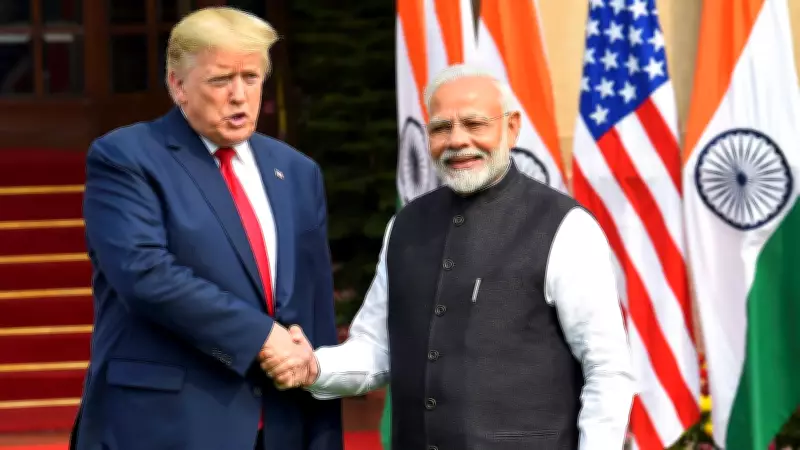
Trump Asserts India Will Stop Buying Russian Oil, Kremlin Responds with Denial
In a recent development, US President Donald Trump has made a bold claim regarding India's energy imports, stating that Prime Minister Narendra Modi has agreed to halt purchases of Russian oil. This announcement came after a phone conversation between the two leaders on Monday, February 3, 2026. However, the Kremlin has swiftly countered this assertion, indicating that they have not received any official communication from India on this matter.
Trade Deal Announcement and Tariff Reductions
Following the discussion with PM Modi, Trump revealed that India and the United States have reached a trade agreement. Under this deal, Washington will reduce the reciprocal tariff on Indian goods from the current 25 percent to 18 percent. This move is part of broader efforts to strengthen economic ties between the two nations. Trump had previously imposed tariffs as high as 50 percent on India, including a 25 percent levy on purchases of Russian energy, making these among the highest tariffs globally.
Kremlin's Response and Russia's Stance
Kremlin spokesman Dmitry Peskov addressed the situation on Tuesday, stating, "We haven't heard any statements from New Delhi on this matter yet." He emphasized that Russia intends to continue developing its relations with India in every possible way, as reported by Russian media. Deputy Prime Minister Alexander Novak, who oversees the energy sector, noted that the government is closely monitoring the situation. He pointed out that Russia is only seeing public statements from the US regarding India potentially refusing Russian oil and expressed confidence that Russian energy resources would remain in demand globally due to their role in maintaining supply-demand balance.

Background on India's Oil Imports and Market Shifts
India, as the world's third-largest oil importer, relies heavily on overseas crude oil, with about 88 percent of its supply coming from abroad. Historically, Russian oil constituted a minimal share of India's imports, at just 0.2 percent until 2021. However, after Western countries imposed sanctions on Russia following its invasion of Ukraine in February 2022, India became a major buyer of discounted Russian crude. Recent data from real-time analytics company Kpler shows a decline in India's imports of Russian oil to around 1.1 million barrels per day in the first three weeks of January, down from an average of 1.21 million bpd in the previous month and over 2 million bpd in mid-2025.
Concurrently, India has diversified its sources, with Iraq now supplying volumes nearly matching Russia's, increasing from an average of 904,000 bpd in December 2025. Imports from Saudi Arabia have also risen to 924,000 bpd in January, up from 710,000 bpd in December and lows of 539,000 bpd in April 2025. Sources in Russia's energy ministry have stated that they have not received any notices from Indian refiners to cancel contracts, adding another layer of uncertainty to Trump's claims.
Implications and Future Developments
The conflicting statements from Trump and the Kremlin highlight the complexities in international energy politics and diplomacy. As the situation unfolds, stakeholders will be watching closely to see how India navigates its energy security and trade relationships. The trade deal between India and the US, with its tariff reductions, could signal a shift in economic alliances, but the oil import issue remains unresolved, with Russia maintaining its commitment to bilateral ties with India.






