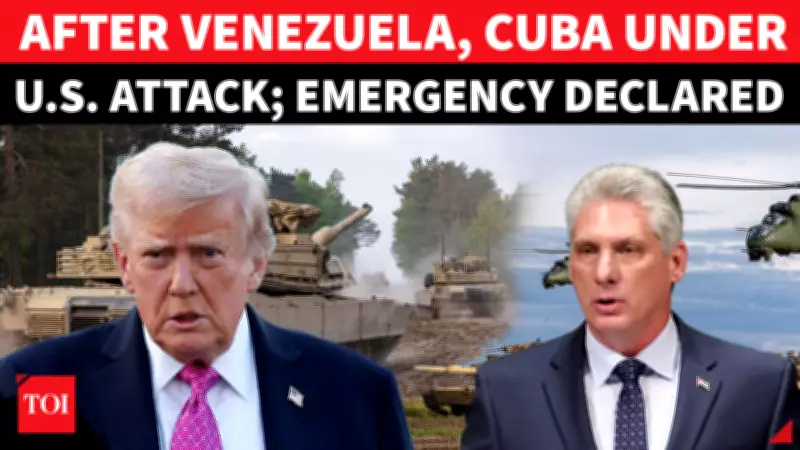
In a dramatic escalation of tensions, the United States has declared a national emergency concerning Cuba, implementing stringent measures that threaten to reshape international energy trade and diplomatic relations. President Donald Trump has authorized the imposition of steep tariffs on any country found supplying oil to Havana, formalizing an expanding energy blockade that analysts warn could push Cuba toward economic collapse and a severe humanitarian crisis.
Intensified Campaign Against Cuba
The move comes after the US sharply intensified its campaign against Cuba, following a military operation in Venezuela that cut off the island's primary energy supplies. With Cuba's reserves dwindling and daily blackouts spreading across the nation, the situation has become increasingly dire. The White House cites national security threats as the rationale behind these aggressive actions, while Cuba's leadership remains defiant in the face of mounting pressure.
Economic and Humanitarian Implications
Experts are sounding alarms about the potential consequences of this energy blockade. The lack of reliable oil supplies could cripple Cuba's economy, leading to widespread shortages, inflation, and social unrest. Humanitarian organizations are closely monitoring the situation, as access to essential services like healthcare and transportation may be severely compromised. This escalation marks the most severe US action against Cuba in decades, reminiscent of historical tensions but with modern geopolitical complexities.

Global Reactions and Diplomatic Fallout
The imposition of tariffs on oil-supplying nations is likely to strain US relations with allies and trading partners. Countries that have historically engaged in energy trade with Cuba may now face difficult choices between economic interests and diplomatic alignment with Washington. The move also raises questions about the broader implications for US foreign policy in Latin America and beyond, particularly in the context of ongoing conflicts and alliances.
Background and Context
The current crisis is rooted in longstanding US-Cuba tensions, which have seen periods of thaw and renewed hostility over the years. The recent military operation in Venezuela, a key ally of Cuba, has further complicated the regional dynamics. By targeting Cuba's energy infrastructure, the US aims to exert maximum pressure on the Havana government, but the strategy carries significant risks, including potential backlash from the international community and unintended humanitarian consequences.
As the situation unfolds, global observers are watching closely to see how Cuba responds to these challenges and whether diplomatic channels might offer a path to de-escalation. The declaration of a national emergency underscores the high stakes involved, with implications for trade, security, and regional stability in the Western Hemisphere.