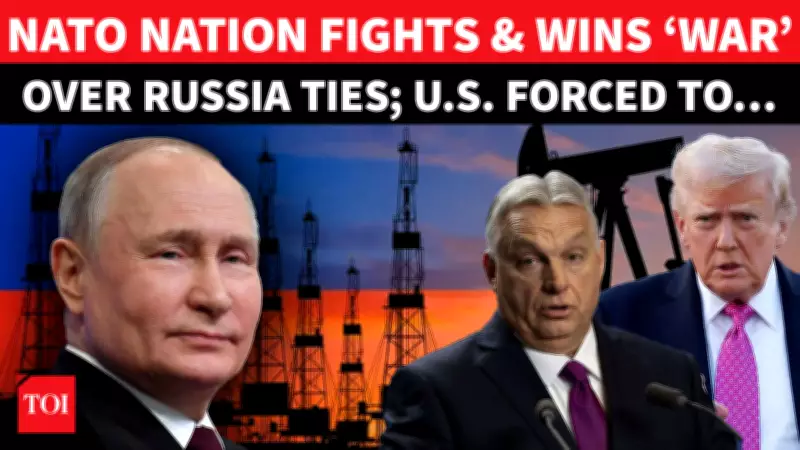
Trump Grants Hungary Major Exemption to Continue Russian Energy Imports
In a surprising diplomatic development, the United States has granted Hungary a significant energy exemption, allowing the European Union member state to continue importing Russian gas and oil. This move comes despite broader European efforts to reduce reliance on Moscow's energy resources following geopolitical tensions.
Budapest Announcement Details
The exemption was formally announced in Budapest, where Hungarian Prime Minister Viktor Orban stood alongside U.S. Secretary of State Marco Rubio. Orban described the arrangement as essential for Hungary's energy stability, emphasizing that it would help maintain steady supplies and protect domestic energy prices from volatility.
The development represents a notable shift in U.S. policy under the Trump administration, which has previously supported European initiatives to diversify energy sources away from Russia. This exemption specifically permits Hungary to bypass sanctions that restrict Russian energy imports, providing the country with continued access to oil and gas from Moscow.

Strategic Implications for Hungary
Hungary's energy infrastructure has long been interconnected with Russian supply networks, making abrupt transitions challenging. The newly granted exemption, combined with existing agreements covering oil, gas, and nuclear cooperation, is expected to:
- Ensure uninterrupted energy flows to Hungarian consumers
- Stabilize pricing mechanisms in the domestic market
- Provide Hungary with greater negotiating leverage in future energy discussions
- Maintain industrial operations that depend on consistent energy inputs
Broader European Context
This development highlights Hungary's increasingly independent approach within the European Union's broader energy and geopolitical landscape. While most EU nations have been working to reduce dependence on Russian energy through diversification initiatives and alternative suppliers, Hungary has pursued a different path focused on maintaining existing supply relationships.
The exemption raises questions about:
- Cohesion within EU energy policy frameworks
- Future negotiations regarding European energy security
- The balance between national interests and collective European objectives
- How other EU members might respond to Hungary's special arrangement
Analysts suggest this move could potentially create friction within the European Union, where energy policy has become increasingly intertwined with geopolitical considerations. The exemption demonstrates how bilateral agreements between individual nations and external powers can influence broader regional dynamics.
As energy security remains a critical concern across Europe, Hungary's continued access to Russian resources through this U.S.-granted exemption represents a significant development in the complex interplay between national interests, regional cooperation, and global energy markets.