

Chhattisgarh Tribal Student Garima Dhruwa Shines in Delhi with Model Youth Gram Sabha
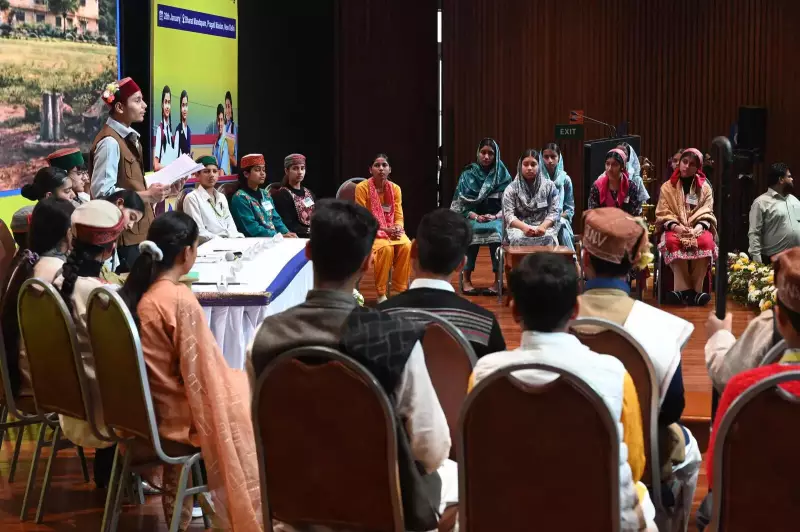
In a remarkable display of confidence and civic awareness, Garima Dhruwa, a class 11 student from the Eklavya Model Residential School (EMRS) for tribal students in Kosambuda, Chhattisgarh, captivated a packed auditorium at Bharat Mandapam in New Delhi on Wednesday. This was her first trip outside her home state, and she played the role of a sarpanch in a Model Youth Gram Sabha (MYGS) presentation, showcasing how grassroots democracy can be made truly participatory.
Bringing Village Issues to Life
Garima, along with a team of around 30 students from classes 9 and 11, enacted a realistic gram sabha scenario, complete with deliberations and solutions. There was no script here, she explained to TOI on the sidelines of the event organized by the Ministry of Panchayati Raj. We, along with our teachers, shortlisted the issues affecting the villages and presented what we have experienced through everyday life in our own villages.
The humanities student, who aspires to become an IAS officer, is the daughter of a teacher. The experience has empowered her to confidently approach the panchayat pradhan in her village to address long-standing issues, such as broken taps in public spaces that make accessing water difficult.

Addressing Real Village Challenges
In the mock gram sabha, Garima's team portrayed various roles, from panch members to the panchayat secretary and villagers of all age groups. They highlighted a range of issues prevalent in villages around Kosambuda and across India:
- A Self Help Group member appealed for support in buying women-made products.
- Residents called for improved sanitation through waste water channels and tree planting.
- The panchayat approved a dedicated vehicle for pregnant women to reach distant hospitals.
- A fine of Rs 500 was proposed for abusive language in public places.
- Families were reprimanded for not sending children to school.
National Recognition and Parallel Efforts
Another group from Jawahar Navodaya Vidyalaya in Una, Himachal Pradesh, also presented a Model Youth Gram Sabha, drawing from everyday village experiences to solve civic, infrastructure, and social issues through community discussion. Shivam Sharma, a class 11 science student who played the sarpanch, shared that the process gave him a new perspective on his village and surrounding areas. We drew a list of issues, visited the village, surveyed the space, met the gram pradhan, and then planned our gram sabha, said Sharma, who aims to be a doctor. Their discussions included demands for a children's library and solar lights, focusing on education, health, and livelihood.
Both schools were awarded first prize at the national awards programme, receiving Rs 1 crore each for development activities. Union Minister of State SP Singh Baghel praised the initiative, noting it marks a paradigm shift in civic education by offering hands-on exposure to grassroots democracy. Secretary Vivek Bharadwaj added that it aligns with Prime Minister Narendra Modi's vision of nurturing 1 lakh young leaders and demonstrates youth's role in solving ground-level problems.
Institutionalizing Youth Engagement
A compendium released at the event revealed that over 28,000 students from 619 Jawahar Navodaya Vidyalayas and 200 EMRS participated in simulated gram sabhas nationwide. The government plans to institutionalize Model Youth Gram Sabhas under the Rashtriya Gram Sabha Abhiyan, with states integrating it into their 2026-27 plans.
The Ministry of Panchayati Raj emphasized that with over 6.64 lakh villages housing 65-70% of India's population, gram sabhas are vital for rural governance. Despite their constitutional role under Article 243, youth participation remains low due to limited awareness and engagement opportunities. The MYGS initiative, developed in partnership with the Department of School Education and Literacy and the Ministry of Tribal Affairs, aims to cultivate civic consciousness among students and strengthen grassroots democracy.






