

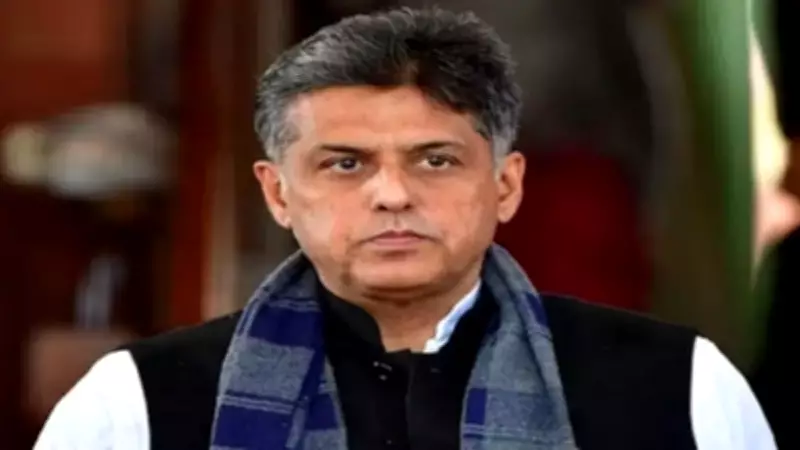
Manish Tewari Endorses India's Neutral Position on West Asia Conflict
In a significant development, Congress Member of Parliament Manish Tewari has publicly backed the Indian government's neutral stance on the ongoing conflict in West Asia, also known as the Middle East. Tewari emphasized that this approach is crucial for protecting India's national interests, stating unequivocally that the conflict is "not our war." This endorsement comes amid heightened tensions in the region, with India maintaining a balanced diplomatic position to avoid entanglement in foreign disputes.
Strategic Alignment with National Interests
Tewari's support highlights a rare moment of bipartisan agreement on foreign policy, underscoring the importance of India's neutrality in the West Asia conflict. He argued that India's primary focus should be on safeguarding its own security and economic stability, rather than taking sides in international conflicts that do not directly involve the nation. This stance is seen as a pragmatic move to ensure India's diplomatic flexibility and maintain positive relations with all parties involved in the region.
The Congress MP pointed out that India's neutral position allows it to act as a mediator and promote peace, while avoiding the risks associated with aligning with any particular faction. This approach is consistent with India's historical foreign policy of non-alignment and strategic autonomy, which has served the country well in navigating complex global dynamics.

Context of the West Asia Conflict
The conflict in West Asia involves multiple nations and non-state actors, with deep-rooted historical and political tensions. India has significant economic and strategic interests in the region, including energy imports and a large diaspora, making its neutral stance a carefully calculated decision. Tewari's backing reinforces the view that this policy is not merely a governmental choice but reflects a broader consensus on prioritizing India's sovereignty and welfare.
By avoiding direct involvement, India aims to protect its citizens and assets in the region, while continuing to engage in diplomatic efforts to de-escalate tensions. This strategy is expected to enhance India's global standing as a responsible and independent actor in international affairs.
Implications for Indian Foreign Policy
Tewari's statement is likely to influence domestic political discourse on foreign policy, encouraging other parties to support a unified approach to international conflicts. It also signals a potential shift towards greater cooperation on national security issues, transcending partisan divides. As the West Asia conflict evolves, India's neutral stance may serve as a model for other nations seeking to balance their interests in volatile regions.
In conclusion, Manish Tewari's endorsement of India's neutral position on the West Asia conflict underscores the importance of a prudent and interest-based foreign policy. By declaring that it is "not our war," he aligns with the government's efforts to safeguard India's future while contributing to global stability through diplomatic means.






